
Cooking an octopus over an open flame transforms it into something extraordinary. The smoky aroma rises with the charred edges, reminding me of seaside markets at dawn. This method emphasizes the tactile thrill—the brush of brine, the snap of tentacles—each step connecting me to centuries of coastal tradition.
Unlike just boiling or braising, grilling leaves a caramelized crust that intensifies the natural umami. The process feels almost ritualistic; flipping the tentacles, listening to the sizzle, tasting the salt in the air. It’s a visceral way to celebrate seafood, rooted in season and simplicity.
WHY I LOVE THIS RECIPE?
- It’s an unassuming dish that brings out complex flavors with minimal fuss.
- The smoky aroma rekindles childhood beach trips and salty breezes.
- I love the tactile part—the char marks, the crackle of the grill—pure sensory joy.
- It reminds me that good ingredients and patience turn into something memorable.
- Sharing this dish makes me feel connected to seaside traditions, no matter where I am.
There’s something almost meditative about tending a hot grill and waiting for that perfect sear. The slosh of marinade, the way the tentacles curl—each moment feels deliberate and rewarding.
In a time when quick eats dominate, this dish slows everything down, savoring every flavor and sensation. It’s a reminder that meaningful cooking can be simple, honest, and deeply satisfying.
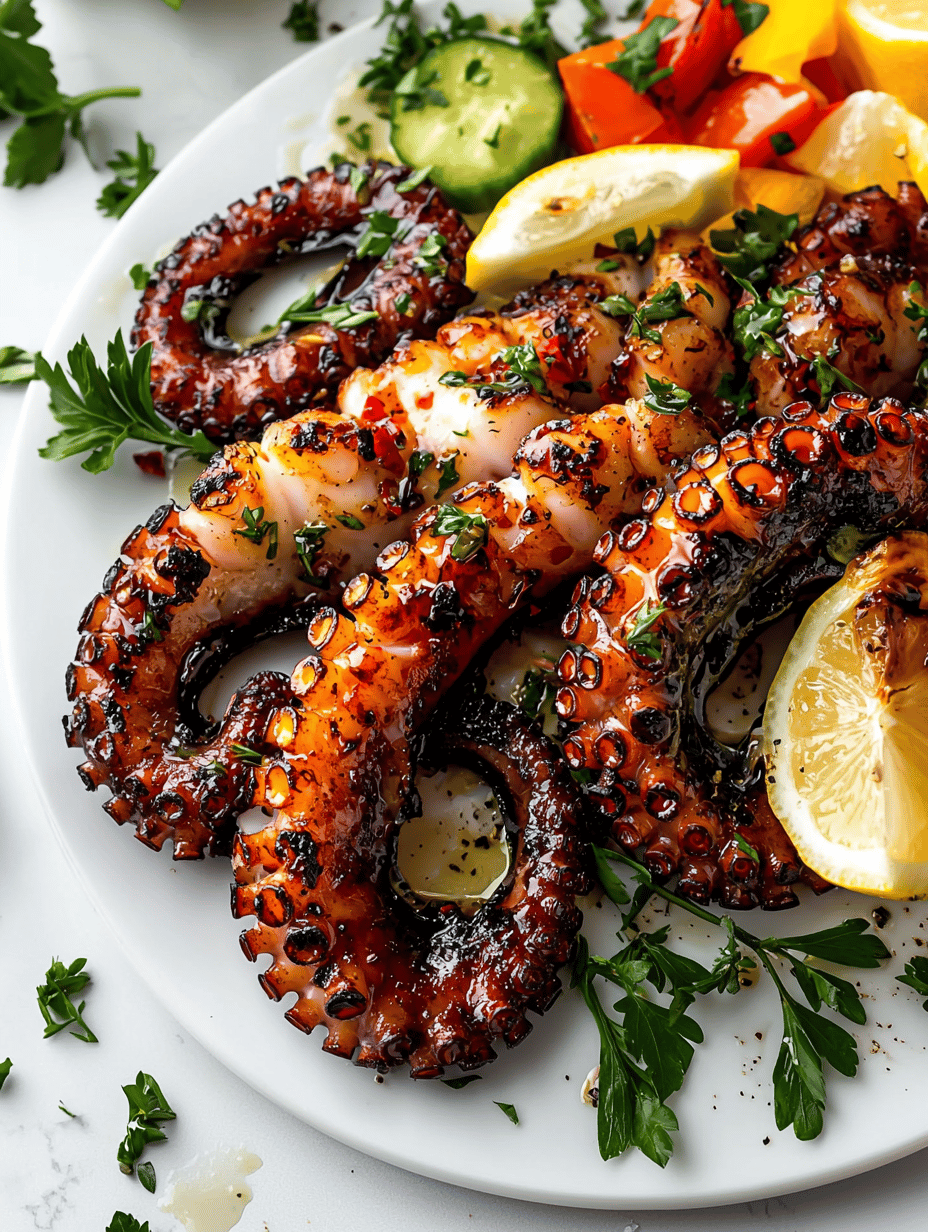
Grilled Octopus
Ingredients
Equipment
Method
- Begin by rinsing the octopus under cold water to remove any residuals, then place it in a bowl with coarse sea salt and cold water—allow it to sit for 15-20 minutes to help tenderize and clean the meat.
- Remove the octopus from the brine, pat it dry thoroughly with paper towels, and then brush all over with olive oil, ensuring an even coating both on tentacles and body. This helps promote a beautiful, crispy exterior.
- Preheat your grill to a high heat, aiming for a fiery temperature that will quickly sear the octopus, developing those irresistible char marks.
- Place the octopus tentacles and body on the grill, laying them directly over the flames. Sear each side for about 3-4 minutes, watching as the edges turn dark and crispy, and listening for a gentle sizzle.
- Use tongs to flip the octopus periodically, ensuring even charring while maintaining tenderness inside. The tentacles should curl slightly as they cook, with a fragrant smoky aroma filling the air.
- Remove the octopus from the grill once it has a crisp, caramelized exterior with visible char lines—this usually takes about 15 minutes in total, depending on size.
- Squeeze fresh lemon juice over the grilled octopus to brighten its flavor, then sprinkle with chopped herbs if desired. Serve hot, with additional lemon wedges on the side.
Notes
The next time you fire up the grill, consider octopus. It’s more than just seafood; it’s a small act of coastal rebellion. The process is rugged, messy, and utterly honest—qualities I find increasingly rare in today’s culinary world.
This recipe is a gentle reminder that tradition and simplicity can still turn a humble ingredient into something extraordinary. It asks for patience, attention, and respect in the kitchen—a quiet celebration of flavor and history.

Hey there, I’m Devon Harper. I run a small neighborhood café by day, cook most of my meals far too late at night, and write Midnight Grocery Runs somewhere in between. If you’ve ever wondered whether something simple could turn into something comforting after a long day, you’ll feel right at home here.


