
There’s something magical about turning overripe bananas into bread. The mushier they get, the sweeter and more fragrant they become—like a little gift from the fruit gods. I’ve always loved how that smell fills the kitchen, warm and inviting, especially on mornings when I need a quick comfort fix.
This banana oat bread is my go-to for those days when I want something hearty but not heavy. It’s not fancy—just honest ingredients and a bit of patience. The oats add a chewy texture that keeps it from feeling too sweet or dense, and the bananas bring a moist, tender crumb every time.
Making this bread feels like a small act of thrift—rescuing bananas that might otherwise go to waste—and I get a kick out of that. Plus, it’s the kind of recipe that’s perfect for breakfast, snacks, or even a sneaky dessert with a smear of butter. It’s simple, genuine, and always satisfying.
Focusing on how overripe bananas can turn into a surprisingly moist, sweet bread that feels like a cozy hug on a chilly morning.
Rescuing Bananas with Oats
- Using overripe bananas feels like giving them a second life, their sweetness deepening in ways I didn’t expect.
- I love how this bread makes my kitchen smell like a cozy Saturday morning, even if it’s a weekday.
- There’s a quiet pride in turning simple ingredients into something that feels indulgent but is actually wholesome.
- Every slice reminds me that imperfect bananas still have a lot to offer, especially when baked into this loaf.
Rescuing Overripe Bananas
- This banana oat bread came about during a stretch of trying to use up every leftover banana. I’d always toss the overripe ones into smoothies, but one day I decided to bake with them instead. The kitchen filled with a warm, toasty smell that reminded me of lazy Sunday mornings, even on busy weekdays. It’s funny how a simple loaf can bring a little bit of calm and comfort when life feels chaotic.
- Making this bread felt like a small act of kindness—rescuing bananas before they go mushy and turning them into something nourishing. Each batch is a reminder that imperfect ingredients can still shine, especially when baked. Plus, it’s become a go-to recipe when I need a quick, honest treat that’s satisfying and a little nostalgic.
- heading
- Story behind this bread
Historical & Cultural Tidbits
- Banana bread’s roots trace back to early 20th century America, where resourcefulness turned overripe fruit into sweet treats.
- Oats in banana bread are a more recent addition, bringing a hearty texture that balances the soft, moist crumb.
- The idea of using overripe bananas for baking was popularized during the Great Depression, as a way to minimize waste and stretch ingredients.
- In some cultures, bananas are seen as a symbol of abundance, making banana bread a comforting, everyday indulgence.
- Quirky trivia: In the 1930s, banana bread recipes often included nuts and spices, reflecting regional tastes and available ingredients.
Ingredient breakdown: key components
- Bananas: I always use bananas that are deeply brown and oozy—those give the bread its sweetest, most tender crumb. If yours are less ripe, add a touch more banana or a drizzle of honey for moisture.
- Rolled oats: I prefer old-fashioned oats for that chewy bite, but quick oats work in a pinch—just expect a slightly softer texture. Toast them lightly beforehand for extra flavor.
- Flour: I stick with all-purpose for a classic crumb. Whole wheat adds a nutty depth, but it makes the bread denser; sift it well to keep the mixture light.
- Baking soda: It’s the secret to that gentle rise and tender crumb. If your baking soda is old, give it a quick test with vinegar—if it fizzes, it’s still good.
- Eggs: They help hold everything together and add richness. For vegan tweaks, try flaxseed meal—mix 1 tbsp with 3 tbsp water until thick and gloopy.
- Sweetener: I often use honey or maple syrup for a subtle, natural sweetness. If you prefer a less sweet bread, cut back a little—just enough to balance the bananas’ flavor.
- Oil: I use neutral oil like sunflower or light olive oil—keeps the bread moist without overpowering. For a richer flavor, a touch of melted butter works beautifully, especially if you want a slightly flaky crust.
Spotlight on key ingredients
Bananas:
- I love using bananas that are deeply brown and oozy—they give the bread its sweetest, most tender crumb. If yours are less ripe, consider mashing a little extra or adding a splash of honey for moisture.
- Rolled oats: I prefer old-fashioned oats for their chewy texture, but quick oats work if you’re in a rush—just expect a slightly softer bite. Toasted oats add a nutty aroma that makes all the difference.
Rolled oats:
- Oats: I always toast my oats lightly before mixing—they develop a toasted aroma that makes the bread smell like a cozy bakery. They also add a chewy contrast to the soft crumb, which I really crave in this loaf.
- Bananas: During baking, bananas turn gooey and caramelize slightly, creating little pockets of intense sweetness and moisture. That smell of caramelized banana is what keeps me coming back to this recipe.
Notes for ingredient swaps
- Bananas: Use frozen bananas that have thawed for a more intense banana flavor and extra moisture. If you don’t have ripe bananas, add a teaspoon of banana extract to boost the flavor.
- Oats: Rolled oats can be swapped for quick oats—just expect a slightly softer, less chewy texture. For gluten-free needs, use certified gluten-free oats.
- Flour: Whole wheat flour can replace all-purpose for a denser, nuttier loaf. If you want a lighter crumb, mix half whole wheat and half white flour.
- Sweetener: Maple syrup can be replaced with honey or agave nectar—each adds its own subtle nuance, but all keep the bread moist and sweet.
- Oil: Coconut oil offers a subtle coconut flavor and adds richness. For a dairy-free but neutral option, use light olive oil—keep an eye on the flavor.
- Eggs: Flax eggs (1 tbsp flaxseed meal + 3 tbsp water) work well for vegan versions, lending a slightly nutty flavor with a different crumb texture.
- Add-ins: Nuts or chocolate chips are optional. If skipping, the bread will be a little less crunchy or sweet, but still delicious.
Equipment & Tools
- Loaf pan: Holds the batter during baking, ensuring even shape and size.
- Fork: Mashes bananas for a smooth, moist base.
- Mixing bowls: Separate and combine wet and dry ingredients efficiently.
- Whisk or spoon: Stirs ingredients without overworking the batter.
- Spatula: Smooths the batter evenly in the pan.
- Toothpick or cake tester: Checks doneness of the baked bread.
- Wire rack: Allows bread to cool evenly and prevents sogginess.
Step-by-step guide to banana oat bread
- Preheat your oven to 175°C (350°F). Grease a standard 9×5 inch loaf pan with butter or non-stick spray. Set aside.
- In a large bowl, mash 3 ripe bananas with a fork until smooth. The more brown and oozy, the better the flavor.
- Add 1/3 cup of neutral oil, 1/4 cup honey or maple syrup, and 2 beaten eggs to the bananas. Mix until well combined—smells sweet and fragrant.
- In a separate bowl, whisk together 1 1/2 cups all-purpose flour, 1 cup rolled oats, 1 teaspoon baking soda, and a pinch of salt.
- Gradually fold the dry ingredients into the wet mixture. Stir just until no streaks remain—don’t overmix, or the bread can get tough.
- Pour the batter into the prepared loaf pan. Smooth the top with a spatula. The batter should be thick but pourable; if it’s too stiff, add a splash of milk.
- Bake for 50-60 minutes. The top should turn golden brown, and a toothpick inserted in the center comes out clean or with just moist crumbs.
- Check for doneness: the bread should feel springy to the touch, and the edges will pull slightly away from the pan. If needed, bake a few minutes longer.
- Remove from oven and let cool in the pan for 10 minutes. Then transfer to a wire rack to cool completely—this helps set the structure and prevents sogginess.
- Finish by slicing once completely cooled. The crust should be golden, and the crumb moist with little tunnels of banana sweetness—smell that warm, toasty aroma.
Let the bread cool in the pan for 10 minutes, then transfer to a wire rack. Slice once fully cooled to avoid squishing. Serve plain or with a smear of butter or jam for extra comfort.
How to Know It’s Done
- Golden brown crust with no wet batter visible on toothpick.
- Bread feels springy but not jiggly when gently pressed.
- Edges slightly pull away from pan, indicating proper baking.
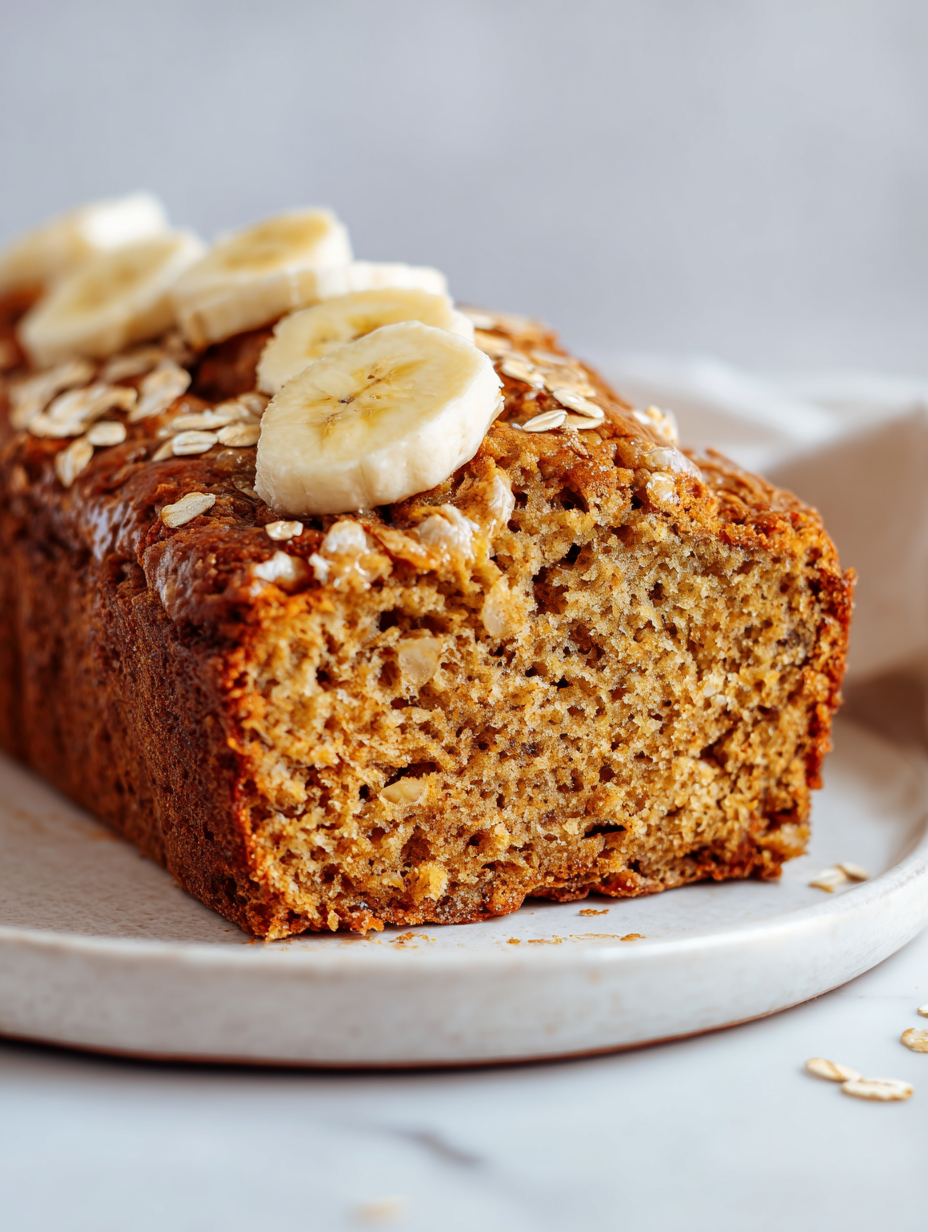
Banana Oat Bread
Ingredients
Equipment
Method
- Preheat your oven to 175°C (350°F) and grease a 9x5 inch loaf pan with butter or non-stick spray. Set it aside.
- Peel the bananas and mash them thoroughly with a fork until smooth and slightly gooey; the more brown and mushy, the better.
- Add the oil and honey to the mashed bananas, then pour in the beaten eggs. Stir everything together until the mixture smells sweet and fragrant, and is well combined.
- In a separate bowl, whisk together the flour, toasted oats, baking soda, and salt to evenly distribute the dry ingredients.
- Gently fold the dry mixture into the wet banana mixture, stirring just until no streaks of flour remain. Be careful not to overmix, as this keeps the bread tender.
- Pour the batter into your prepared loaf pan and smooth the surface with a spatula. The batter should be thick but still pourable; add a splash of milk if it’s too stiff.
- Bake the bread in the preheated oven for 50-60 minutes, until the top is golden brown and a toothpick inserted in the center comes out clean or with moist crumbs.
- Once baked, remove the loaf from the oven and let it cool in the pan for about 10 minutes. Then transfer it to a wire rack to cool completely—the aroma of caramelized banana will fill your kitchen.
- Slice the bread once cooled, revealing a moist, tender crumb with little pockets of caramelized banana. Serve plain, or with butter or jam for extra indulgence.
Notes
Pro tips for perfect banana oat bread
- Use ripe bananas with deep brown spots—they’re sweeter and more flavorful.
- Toast oats lightly beforehand—brings out a nutty aroma and adds chewiness.
- Mix dry ingredients gently—overworking can make the bread dense and tough.
- Check for doneness with a toothpick—should come out clean or with moist crumbs.
- Cool in the pan for 10 minutes—helps set the structure and prevents sogginess.
- For a shiny crust, brush the top with a little milk or butter before baking.
- Use a dark loaf pan—promotes even baking and a nicely browned crust.
Common mistakes and how to fix them
- FORGOT to check oven temperature → Use an oven thermometer for accuracy.
- DUMPED in too much flour → Lightly sift flour to prevent dense texture.
- OVER-TORCHED the crust → Cover with foil if browning too fast around 40 minutes.
- UNDER-BAKED in the center → Extend baking time by 5-minute increments, check with toothpick.
Quick fixes and pantry swaps
- If bananas are too firm, splash them with lemon juice to soften and brighten flavor.
- When batter is too thick, patch with a splash of milk for easier mixing and moist crumb.
- Splash a little vanilla or cinnamon if the bread smells flat or bland during baking.
- Dumped in too much oats? Rescue with an extra mashed banana to restore moisture.
- Over-torched crust? Shield with foil and lower oven temp by 5°C (10°F) for even baking.
Prep, store, and reheat tips
- Prep the mashed bananas and dry ingredients a day ahead; store bananas in an airtight container in the fridge, smelling sweet and slightly fermented, ready to mix when needed.
- Wrap cooled bread tightly in plastic wrap or foil. It will stay moist for up to 3 days at room temperature, with a soft, fragrant crumb and a slightly chewy crust.
- For longer storage, slice and freeze the bread in airtight bags—thaw at room temp for a soft, cool bite, with the aroma intensifying as it warms.
- Reheat slices briefly in a toaster or oven at 150°C (300°F) until warm and fragrant—listen for a slight crackle and smell that sweet, toasty aroma.
Top questions about banana oat bread
1. How ripe should the bananas be?
Use overripe bananas with deep brown spots—they’re the sweetest and most flavorful, giving the bread a moist, tender crumb with a caramelized aroma. Less ripe bananas can be compensated with a little extra honey or banana extract.
2. Can I use quick oats instead of rolled oats?
You can swap rolled oats for quick oats—quicker to mix but slightly softer in texture. Toast the oats beforehand for a nuttier flavor and added aroma.
3. Can I substitute whole wheat flour?
Yes, whole wheat flour can replace all-purpose for a heartier, nuttier loaf. The crumb will be denser, so sift it well and expect a slightly coarser texture.
4. What if I don’t have honey or maple syrup?
Replace honey or maple syrup with agave nectar or coconut sugar—each adds a subtle flavor difference but maintains moisture and sweetness.
5. Can I substitute the oil?
Use light olive oil or coconut oil for a neutral or subtly fragrant loaf. For richer flavor, melted butter works beautifully—just watch for a slightly flaky crust.
6. Can I make this vegan?
For vegan options, replace eggs with flaxseed meal mixed with water—about 1 tbsp flaxseed to 3 tbsp water per egg—for a nutty flavor and different crumb texture.
7. How do I prevent over-browning?
If the crust browns too quickly, cover the loaf with foil after 40 minutes and lower oven temperature slightly to prevent burning while finishing baking.
8. How should I store leftovers?
Store cooled bread tightly wrapped at room temperature for up to 3 days, or freeze slices for longer storage. Reheat in the oven until fragrant and slightly warm, listening for that crackle of crust.
9. What if my batter is too stiff?
If the batter seems too thick, stir in a splash of milk to loosen it, making it easier to pour into the pan and ensuring a moist crumb.
10. How do I know when it’s done?
Always check for doneness with a toothpick: it should come out clean or with just moist crumbs, and the bread should feel springy but not jiggly in the center.
This banana oat bread feels like a quiet victory—simple ingredients, honest effort, and a smell that wraps around you like a soft blanket. It’s perfect for those mornings when you need a gentle nudge of comfort, or an easy way to use up those overripe bananas hiding in your fruit bowl.
In the end, it’s just bread, but the way the bananas caramelize and the oats add chew makes it feel a little more special. Sometimes, it’s the humble recipes that stick around longest, offering a moment of calm in a busy day. And honestly, that’s all I really want from a slice.

Hey there, I’m Devon Harper. I run a small neighborhood café by day, cook most of my meals far too late at night, and write Midnight Grocery Runs somewhere in between. If you’ve ever wondered whether something simple could turn into something comforting after a long day, you’ll feel right at home here.


