
When I first started baking shortbread, I was obsessed with how different butters would change the cookie’s personality. Using European-style butter yields a richer, more tender crumb, while American butter gives a crisper edge. It’s a small tweak that makes a big difference in texture and flavor, and I love experimenting with it.
Baking these cookies is like a quiet act of rebellion—simple ingredients, but the process is so tactile. I find myself lost in the flaky layers and the buttery aroma that fills the kitchen. It’s honest baking, with no fuss, just a little patience and a lot of love for that melt-in-your-mouth bite.
Focusing on how the texture of shortbread changes with different butter types and how that impacts the baking process.
The story behind this recipe
My grandma’s kitchen was always filled with the buttery scent of shortbread, especially around the holidays. I remember the way she’d press the dough into her old tin, the sound of the rolling pin, and how she’d cut perfect rectangles with a gentle, practiced hand. Those cookies weren’t just treats—they were quiet moments of love wrapped in flaky, melt-in-your-mouth goodness. I’ve been chasing that simple, honest comfort ever since, tweaking the recipe but never losing the soul of it.
Ingredient breakdown: key components
- Unsalted butter: I prefer European-style for its richness and creaminess, which makes the cookies tender and melts-in-your-mouth. If you only have regular butter, just add a splash of milk for extra softness.
- Granulated sugar: I keep it simple with regular sugar, but a touch of powdered sugar can give a finer crumb and a slightly sweeter finish. Watch out for overmixing after adding the sugar—keep it light and minimal.
- All-purpose flour: I sift mine to avoid lumps and ensure a delicate texture. If you’re gluten-sensitive, swap half for rice flour, but expect a slightly crumblier cookie.
- Salt: I add a pinch to balance the richness—don’t skip it. If using salted butter, reduce the added salt by half to avoid oversalting.
- Vanilla extract: I love a good splash of vanilla for depth, but you can swap in almond extract for a nutty twist or lemon zest for brightness—just go easy, it’s about subtle enhancement.
- Optional decorations: A light sprinkle of sea salt or a drizzle of dark chocolate can elevate these cookies. Use flaky sea salt for contrast, or melt chocolate for a rich, glossy finish.
- Chilling time: I find that refrigerating the dough for at least 30 minutes helps prevent spreading and tightens the crumb. If you’re in a rush, even 15 minutes will do, but the texture won’t be quite as refined.
Spotlight on key ingredients
All-purpose flour:
- Unsalted butter: I prefer European-style for its richness and creaminess, which makes the cookies tender and melts-in-your-mouth. If you only have regular butter, just add a splash of milk for extra softness.
- Granulated sugar: I keep it simple with regular sugar, but a touch of powdered sugar can give a finer crumb and a slightly sweeter finish. Watch out for overmixing after adding the sugar—keep it light and minimal.
- I sift mine to avoid lumps and ensure a delicate texture. If you’re gluten-sensitive, swap half for rice flour, but expect a slightly crumblier cookie.
Notes for ingredient swaps
- Dairy-Free: Swap butter for coconut oil or a dairy-free butter alternative. Expect a slightly different richness and a hint of coconut aroma.
- Sweetener Options: Replace sugar with honey or maple syrup. Use less liquid if you do, and expect a softer, more delicate crumb.
- Flour Variations: Use gluten-free all-purpose flour or almond flour. The texture may be more crumbly or tender—experiment with small batches first.
- Salt: Reduce or omit if using salted butter to prevent oversalting. A pinch of sea salt still enhances flavor without overpowering.
- Flavor Boosts: Add lemon zest, almond extract, or a splash of bourbon for extra depth. Keep it subtle, as shortbread is all about the butter and sugar.
- Decorative Toppings: Use chopped nuts, sprinkles, or drizzles of dark chocolate instead of traditional decorations. Adds crunch and visual appeal.
- Chilling Time: Shorten chilling to 15 minutes if pressed for time, but dough might be a bit more fragile and spread slightly during baking.
Equipment & Tools
- Mixing bowl: Combine ingredients evenly.
- Spatula: Mix and fold dough gently.
- Rolling pin: Flatten dough to even thickness.
- Cookie cutter or knife: Shape cookies uniformly.
- Baking sheet: Bake cookies on a flat surface.
- Parchment paper: Prevent sticking and easy cleanup.
- Cooling rack: Cool cookies evenly and maintain crispness.
Step-by-step guide to shortbread
- Equipment & tools: Gather a mixing bowl, a spatula, a rolling pin, a cookie cutter or knife, baking sheet, parchment paper, and a cooling rack. The bowl for mixing, the rolling pin for shaping, and the sheet for baking are essentials.
- Preheat your oven to 175°C (350°F). Line a baking sheet with parchment paper to prevent sticking.
- In the mixing bowl, cream 1 cup (226g) unsalted butter, softened, with 1/2 cup (60g) sugar. Mix until just combined and slightly fluffy, about 2-3 minutes.
- Add 1 teaspoon vanilla extract. Mix briefly to incorporate the flavor, about 30 seconds.
- Sift in 2 cups (240g) all-purpose flour and a pinch of salt. Mix gently with a spatula until the dough just comes together. Do not overmix; it should be crumbly but hold when pressed.
- Gather the dough into a ball, then flatten into a disc. Wrap in plastic wrap and chill in the fridge for at least 30 minutes. This helps prevent spreading and develops flavor.
- Once chilled, roll out the dough on a lightly floured surface to about 0.5 cm (1/4 inch) thickness. Keep the dough cold while rolling to avoid sticking.
- Use a cookie cutter or knife to cut into rectangles or your preferred shape. Transfer carefully to the prepared baking sheet, spacing about 1 inch apart.
- Chill the cut cookies on the sheet for 10 minutes before baking. This helps maintain shape.
- Bake at 175°C (350°F) for 12-15 minutes. The edges should turn a light golden. Keep an eye on them after 10 minutes to prevent overbaking.
- Remove from oven and let cookies rest on the sheet for 5 minutes. Then transfer to a wire rack to cool completely. The cookies will firm up as they cool.
- Finish by sprinkling with a little sea salt or drizzling with melted chocolate, if desired. Let set before serving.
- For best flavor, store in an airtight container at room temperature for up to a week. Keep away from humidity to prevent softening.
Wrap the baked cookies in an airtight container once cooled. For presentation, sprinkle with sea salt or drizzle with melted chocolate. Serve when just set for optimal texture and flavor.
How to Know It’s Done
- Edges are light golden and firm when gently pressed.
- Cookies feel firm but still slightly tender when cooled.
- Cracks form along the edges, indicating proper baking time.
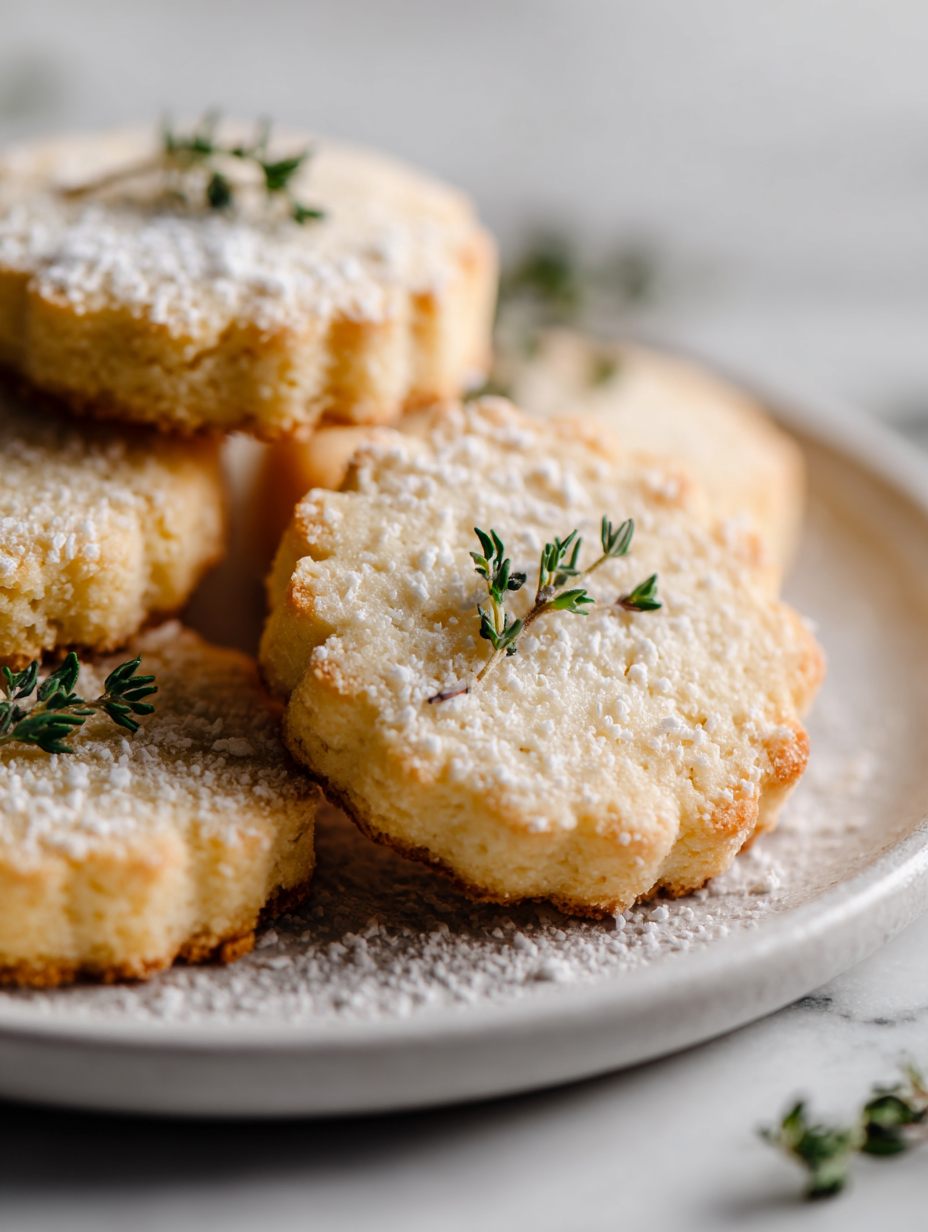
Classic Shortbread Cookies
Ingredients
Equipment
Method
- Start by softening the butter slightly, then place it in a mixing bowl.
- Add the granulated sugar to the butter and beat gently with a spatula or hand mixer until the mixture is smooth, slightly fluffy, and fragrant—about 2-3 minutes. This helps dissolve the sugar and creates a tender crumb.
- Pour in the vanilla extract and stir briefly to combine, releasing a warm, sweet aroma.
- Sift the all-purpose flour and salt together into the bowl to avoid lumps and ensure an even distribution.
- Gradually add the sifted flour mixture to the butter and sugar, folding gently with a spatula until the dough just begins to come together. It will be crumbly but still hold when pressed.
- Gather the dough into a ball, then flatten it into a disc. Wrap tightly in plastic wrap and refrigerate for at least 30 minutes to relax the gluten and firm up the butter.
- Once chilled, remove the dough from the fridge and place on a lightly floured surface. Roll it out to about 0.5 cm (1/4 inch) thickness, maintaining an even layer.
- Use a cookie cutter or sharp knife to cut the dough into rectangles or your preferred shapes. Transfer the cut cookies to a parchment-lined baking sheet, spacing them about 1 inch apart.
- Chill the shaped cookies on the baking sheet for another 10 minutes to help them hold their shape during baking.
- Bake in a preheated oven at 175°C (350°F) for 12-15 minutes, or until the edges are just lightly golden. Keep a close eye after 10 minutes to prevent overbaking.
- Remove the cookies from the oven and let them rest on the sheet for about 5 minutes; then transfer to a cooling rack. They will be crisp and flaky as they cool, with a subtle buttery aroma filling your kitchen.
- Finish by sprinkling a tiny pinch of sea salt or drizzling with melted chocolate, if desired. Serve once completely cooled—these cookies are best enjoyed with a cup of tea or coffee.
Tips & Tricks for Perfect Shortbread
- Chill dough thoroughly → Keeps cookies from spreading too thin during baking.
- Use cold butter → Incorporate cold butter for a flaky, tender texture that melts in your mouth.
- Score before baking → Lightly score dough before chilling for clean, even cuts after baking.
- Watch the edges → Remove cookies when edges are just lightly golden for perfect crispness.
- Keep dough cold → Handle dough minimally and keep it cold to prevent cracks and excess spreading.
- Use parchment paper → Prevents sticking and makes transferring cookies easier and cleaner.
- Bake in the middle rack → Ensures even baking and prevents over-browning at the edges.
Common mistakes and how to fix them
- FORGOT to chill dough → Chill for at least 30 minutes to prevent spreading.
- DUMPED too much flour → Add flour gradually, stop when dough just comes together.
- OVER-TORCHED cookies → Remove when edges are light golden, not dark brown.
- CRACKED dough → Keep dough cold and handle gently to prevent cracks.
Quick fixes and pantry swaps
- When dough cracks, patch with a small piece and gently reshape.
- Splash a tiny bit of cold water if dough feels too crumbly and won’t hold.
- When cookies spread too much, chill the dough longer before baking.
- Dumped too much flour? Brush off excess before rolling for a softer crumb.
- Overbaked cookies? Shield edges with foil or reduce oven temperature slightly.
Prep, store, and reheat tips
- Dough can be prepared a day ahead, wrapped tightly in plastic and kept refrigerated. The butter flavor mellows and the texture firms up, making rolling easier.
- Store baked cookies in an airtight container at room temperature for up to a week. They stay crisp on the edges and tender inside, with a buttery aroma lingering.
- For longer storage, freeze cookies in a single layer on a baking sheet, then transfer to a zip-top bag. They’ll keep for up to a month, with flavors still bright upon thawing.
- Reheat cookies briefly in a low oven (about 150°C/300°F) for 5 minutes. Expect a gentle crackle and aroma of toasted butter that signals freshness restored.
Top questions about shortbread
1. Should I use softened or cold butter?
Use cold butter to keep the dough firm and easy to handle, which prevents spreading during baking.
2. How long should I chill the dough?
Chill the dough for at least 30 minutes; it helps prevent spreading and improves texture.
3. When are the cookies done?
Bake until the edges are just light golden; overbaking makes the cookies too hard and dry.
4. How do I cut perfect shapes?
Use a sharp knife or cookie cutter for clean, even shapes; a dull edge tears the dough.
5. How long do shortbread cookies last?
Store in an airtight container at room temperature; they stay crisp for up to a week.
6. Can I omit the salt?
Add a pinch of salt to balance sweetness and enhance butter flavor; skip if using salted butter.
7. Can I change the flavorings?
You can swap vanilla extract for almond or lemon zest for a different flavor profile.
8. Why do my cookies spread or lose shape?
Chill the cut cookies on the baking sheet for 10 minutes before baking to keep their shape.
9. Can I prepare the dough in advance?
Refrigerate dough overnight for deeper flavor or freeze for longer storage; bring to room temperature before baking.
10. My dough is too dry or crumbly, what now?
If dough feels too crumbly, add a tiny splash of cold water or milk to bring it together.
Making these shortbread cookies is like a quiet conversation with the past—a simple recipe, but the buttery aroma and flaky texture carry memories of family kitchens and holiday mornings. Every batch feels like a small victory, especially when the edges crackle just right and the flavor melts on your tongue.
In times when comfort is needed or a little sweetness feels right, these cookies come through. They’re humble, honest, and always welcome—perfect for sharing or keeping close. Sometimes, the simplest treats are the most memorable, especially when baked with a little care.

Hey there, I’m Devon Harper. I run a small neighborhood café by day, cook most of my meals far too late at night, and write Midnight Grocery Runs somewhere in between. If you’ve ever wondered whether something simple could turn into something comforting after a long day, you’ll feel right at home here.


