
Lemon bars might seem straightforward, but there’s a secret to making theirs unforgettable: the quality of your lemon and the balance of sweet and tart. When I first started baking these, I realized how much the zest and juice can make or break the flavor—too much zest, and it’s overwhelming; too little, and it feels flat.
This recipe is about embracing that bright, zingy punch of lemon while letting a buttery, crumbly crust serve as a perfect foil. I love how the aroma of fresh lemon zest fills the kitchen as they bake, turning simple ingredients into something that feels both nostalgic and refreshingly new. It’s a little messy, a little chaotic, but always worth the effort.
Focusing on balancing the tangy brightness of lemon with a buttery, crumbly crust that melts in your mouth, this recipe emphasizes the importance of zesting and juice quality, turning a simple dessert into a sensory experience that wakes up your palate.
The story behind this recipe
- Making lemon bars has always been a bit of a ritual in my kitchen, especially during spring when lemons are at their peak. I remember the first time I tried to perfect the balance of tart and sweet, I was obsessed with getting that perfect zing without it overpowering the buttery crust. It’s funny how a simple dessert can take on so much meaning—this one reminds me of lazy Sunday afternoons spent with a messy kitchen and a glass of cold milk.
- There’s a messy joy in zesting lemons, feeling that sharp citrus scent fill the air, and knowing it’s going into something that will brighten up any dull day. I’ve learned that the tiniest tweak—more zest, less sugar—can transform the whole batch from just good to something I want to make again and again. These bars are more than dessert; they’re a little ritual of brightness, a reminder that simple ingredients can wake up your taste buds.
- heading: ‘The story behind this recipe’
Ingredient breakdown: key components
- Lemon zest: I love using fresh, organic lemons. The zest adds a bright, aromatic punch that really wakes up the palate—don’t skip it, even if it seems small, it’s the flavor enhancer.
- Lemon juice: I prefer freshly squeezed over bottled for that vibrant, tangy brightness. Squeeze just before mixing to keep the juice lively and zesty, not dull or flat.
- Butter: I use cold, unsalted butter to keep the crust tender and crumbly. If your butter is too soft, the crust might spread too much, so handle it quickly and chill if needed.
- Sugar: Granulated sugar gives the right sweetness without overpowering the lemon. For a slightly more complex flavor, try a touch of superfine sugar—dissolves faster and blends seamlessly.
- Eggs: Fresh eggs give a silky, smooth filling; beat them well to avoid lumps. If you’re out of large eggs, a little extra yolk can boost richness.
- Flour: All-purpose flour is my go-to for structure. If you want a nuttier crust, swap in almond flour, but reduce the amount slightly to keep it tender.
- Powdered sugar (for dusting): I sift it to avoid clumps. Light dusting right before serving enhances the visual and adds a delicate sweetness that complements the tart lemon.
Spotlight on key ingredients
Lemon:
- Lemon zest: I love using fresh, organic lemons. The zest adds a bright, aromatic punch that really wakes up the palate—don’t skip it, even if it seems small, it’s the flavor enhancer.
- Lemon juice: I prefer freshly squeezed over bottled for that vibrant, tangy brightness. Squeeze just before mixing to keep the juice lively and zesty, not dull or flat.
Butter & Sugar:
- Butter: I use cold, unsalted butter to keep the crust tender and crumbly. If your butter is too soft, the crust might spread too much, so handle it quickly and chill if needed.
- Sugar: Granulated sugar gives the right sweetness without overpowering the lemon. For a slightly more complex flavor, try a touch of superfine sugar—dissolves faster and blends seamlessly.
Notes for ingredient swaps
- Lemon zest: Use preserved lemon zest if fresh lemons aren’t available, but expect a slightly muted citrus aroma.
- Lemon juice: Swap with bottled lemon juice for convenience, though it may lack the same bright, fresh punch.
- Butter: Replace with vegan margarine or coconut oil; the crust will still be tender but with a different flavor profile.
- Sugar: Use honey or agave syrup for a natural sweetness, but reduce the liquid slightly to compensate.
- Eggs: Substitute with ground flaxseed mixed with water (1 tbsp flaxseed + 3 tbsp water per egg) for a vegan option, which will alter the texture slightly.
- Flour: Swap half the flour for almond or oat flour for a nuttier, denser crust—reduce total flour slightly to keep it tender.
- Powdered sugar: Finish with a drizzle of honey or a dusting of cocoa powder for a different visual and flavor twist.
Equipment & Tools
- 9-inch square baking pan: To bake the crust and filling in a uniform thickness.
- Parchment paper: For easy removal and clean edges.
- Mixing bowls: To prepare crust and filling separately.
- Pastry cutter or fingers: To cut butter into dry ingredients for crust.
- Whisk: To combine lemon juice, zest, eggs, and sugar smoothly.
- Fine sieve: To dust powdered sugar evenly on top.
- Cooling rack: To cool bars evenly after baking.
Step-by-step guide to lemon bars
- Preheat your oven to 175°C (350°F). Grease a 9-inch square baking pan with butter, then line it with parchment paper, leaving an overhang for easy removal.
- In a mixing bowl, combine 1 cup (125g) of all-purpose flour, 1/4 cup (50g) of granulated sugar, and a pinch of salt. Mix well.
- Add 1/2 cup (115g) of cold unsalted butter, cubed. Use a pastry cutter or your fingers to work the butter into the dry ingredients until the mixture resembles coarse crumbs. Press this mixture into the prepared pan evenly. Bake for 20 minutes, until lightly golden around the edges.
- While the crust is baking, zest and juice 2 large lemons. You should have about 2-3 tablespoons of zest and 1/3 cup of juice. Whisk together the lemon juice, zest, 3 large eggs, 3/4 cup (150g) of granulated sugar, and 1/4 cup (30g) of all-purpose flour until smooth.
- Once the crust is baked, carefully pour the lemon filling over it while still hot. Return to the oven and bake for an additional 20-25 minutes. The filling should be set but slightly jiggly in the center.
- Remove from oven and let cool in the pan for about 30 minutes. Then, transfer to a wire rack and let cool completely. Chill in the fridge for at least 2 hours before slicing.
- Before serving, dust the top with powdered sugar for a delicate finish. Use a fine sieve to ensure an even, light coating.
- Slice into squares with a sharp knife, wiping it clean between cuts for tidy edges. Serve chilled or at room temperature for the best lemon punch.
Let the lemon bars cool completely in the pan, then chill in the fridge for at least 2 hours. Slice with a sharp knife, wiping it clean between cuts. Dust with powdered sugar just before serving for a bright, polished look.
How to Know It’s Done
- Crust edges are golden and firm.
- Filling is set but slightly jiggly in the middle when removed from oven.
- Lemon aroma is bright and citrusy when baking.
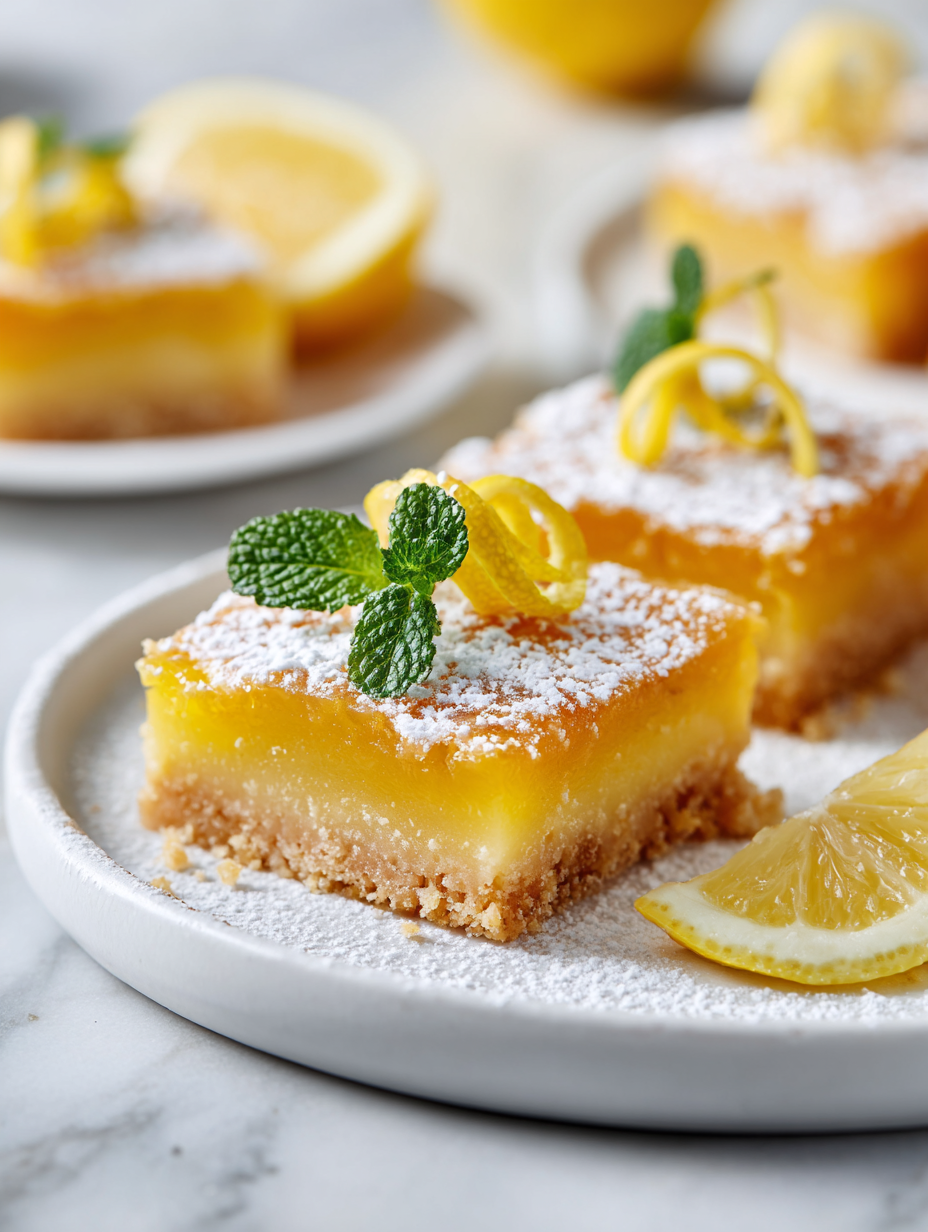
Lemon Bars
Ingredients
Equipment
Method
- Preheat your oven to 175°C (350°F). Line a 9-inch square baking pan with parchment paper, leaving an overhang for easy removal.
- In a mixing bowl, combine 1 cup of flour, 1/4 cup of sugar, and a pinch of salt. Mix until evenly distributed.
- Add the cold, cubed butter to the bowl and work it into the flour mixture using a pastry cutter or your fingers until the mixture resembles coarse crumbs.
- Press this mixture evenly into the bottom of your prepared pan, creating a firm crust. Bake for 20 minutes or until lightly golden around the edges and fragrant.
- While the crust bakes, zest both lemons finely, then squeeze out about 1/3 cup of fresh lemon juice. Set aside.
- In a bowl, whisk together the lemon juice, zest, eggs, 3/4 cup of sugar, and 1/4 cup of flour until the mixture is smooth and slightly frothy.
- Once the crust is baked and slightly cooled, pour the lemon filling evenly over it.
- Return the pan to the oven and bake for an additional 20-25 minutes, until the filling is set but still slightly wobbly in the center.
- Remove the bars from the oven and let them cool completely in the pan on a wire rack, about 30 minutes. Then, transfer to the fridge and chill for at least 2 hours to set fully.
- Once chilled, use the parchment overhang to lift the bars out of the pan. Slice into squares with a sharp knife, wiping the blade clean between cuts for tidy edges.
- Dust the top generously with sifted powdered sugar just before serving for a delicate, sweet finish. Enjoy these bright, refreshing lemon bars!
Pro tips for perfect lemon bars
- zest: Use a microplane for fine, fragrant zest that evenly distributes flavor.
- Brighten with juice: Squeeze lemons just before mixing to preserve that lively citrus punch.
- Chill the crust: Keep your butter cold and refrigerate the crust before baking for maximum flakiness.
- Watch the color: Bake until edges are golden and slightly darker for a caramelized flavor.
- Check doneness: The filling should jiggle just a little when gently shaken, not be runny.
- Dust carefully: Sift powdered sugar before dusting for an elegant, clump-free finish.
- Slice cold: Chill the bars fully before slicing for clean, neat edges and better presentation.
Common mistakes and how to fix them
- FORGOT to check crust color → Bake until edges are golden brown.
- DUMPED filling too quickly → Pour gently to avoid cracks and bubbles.
- OVER-TORCHED edges → Cover with foil if edges brown too fast.
- MISSED the chill time → Chill bars at least 2 hours for clean slices.
Quick fixes and pantry swaps
- When lemon aroma shimmers, your bars are nearly done.
- Splash a little water on crust if it cracks during baking.
- Patch a dry crust with a dab of melted butter for extra richness.
- Shield edges with foil if they brown too fast in the oven.
- If filling cracks or bubbles, gently tap the pan to even out.
Prep, store, and reheat tips
- Prepare the crust and lemon filling a day in advance; keep the crust unbaked in the fridge, wrapped tightly, for up to 24 hours. The vibrant lemon aroma will boost your anticipation.
- Bake the bars completely, then let them cool in the pan. Once cooled, cover tightly and store in the fridge for up to 3 days. The chilled texture keeps the filling firm and refreshing.
- For longer storage, freeze the lemon bars wrapped in plastic wrap and foil for up to 1 month. Thaw in the fridge and bring to room temperature before serving to enjoy the full lemon brightness.
- Reheat slices briefly in a low oven (about 150°C/300°F) for 5-7 minutes, until warm and fragrant. The crust will regain a slight crunch, and the lemon filling will shimmer with renewed zest.
Top questions about lemon bars
1. Can I use dried lemon zest or lemon extract instead of fresh zest?
Fresh lemon zest gives a bright, aromatic punch that can’t be matched by dried zest or extracts.
2. Can I replace fresh lemon juice with bottled juice?
Absolutely, but dried zest may be less vibrant, and extract can overpower if used excessively. Adjust quantities and taste as you go.
3. Will the flavor suffer if I use bottled lemon juice?
Using bottled lemon juice is fine in a pinch, but fresh juice makes the filling more vibrant and lively.
4. How long should I chill the lemon bars before serving?
Chill the bars thoroughly—at least 2 hours—so they slice cleanly and the flavors meld beautifully.
5. How do I know when the lemon bars are done baking?
Bake until the edges are golden and the filling is just set but still slightly wobbly in the center.
6. What if the edges over-brown before the filling is cooked?
If the crust edges brown too quickly, shield them with foil to prevent burning while the filling finishes setting.
7. When should I add the powdered sugar topping?
Dust with powdered sugar just before serving to add a delicate sweetness and a pretty finish.
8. Can I freeze lemon bars for later?
Yes, you can freeze the baked bars wrapped tightly for up to a month. Thaw in the fridge and reheat briefly if desired.
9. How can I get perfect, clean slices?
Use a sharp knife, wiping it clean between cuts, to get neat, tidy squares without cracking the surface.
10. Can I tweak the sweetness or tartness of the filling?
Adjust the amount of sugar if your lemons are very tart or very sweet, tasting the filling before baking.
Baking these lemon bars is a small act of brightness, especially when lemon season is in full swing. The aroma alone—bright, zesty, and sweet—reminds me why I keep coming back to this simple, honest dessert.
Once they’re chilled and sliced, each bite offers that perfect balance of tangy lemon and buttery crust—messy, imperfect, but undeniably satisfying. It’s a reminder that good things often come from just a handful of humble ingredients, treated with care.

Hey there, I’m Devon Harper. I run a small neighborhood café by day, cook most of my meals far too late at night, and write Midnight Grocery Runs somewhere in between. If you’ve ever wondered whether something simple could turn into something comforting after a long day, you’ll feel right at home here.


