
Firing up the grill is the loudest part—hearing the sizzle as you lay down the skewers, feeling the heat through the sticks. It’s a messy process, with marinade dripping onto the coals, sending up a smoky hiss.
Handling raw chicken can be slick and slippery, the marinade making everything sticky and clinging to your hands. Turning the kabobs often is a workout, trying not to drop the pieces while watching for that perfect caramelized edge.
the sound of the marinade fizzing as it hits the hot grill, and the way the juices crackle when you turn the kabobs—it’s a messy, satisfying symphony of flavors and textures.
What goes into this dish
- Chicken breasts: I slice these into even chunks, ensuring they cook uniformly; if you prefer dark meat, thighs work juicier and more forgiving. The smell of raw chicken is sharp, so wash hands well afterward.
- Bell peppers: I like to use a mix of red and yellow for color and sweetness, but green peppers add that crisp bite and slightly bitter note. Cut into chunks that won’t fall apart on the skewer.
- Red onion: I cut thick wedges so they don’t slip off, and they bring a smoky-sweet aroma when grilled. Skip if you’re not into their pungent punch; maybe swap with scallions for milder flavor.
- Olive oil: I brush the chicken and veggies generously; it helps everything sear and keeps it moist. If you’re out, any neutral oil with a high smoke point will do—avocado oil’s a good stand-in.
- Lemon juice: I squeeze fresh to brighten the marinade, adding a zesty punch that cuts through the richness. Bottled lemon works too, but fresh is brighter and more aromatic.
- Garlic: I use minced fresh cloves for that pungent, aromatic hit—smells incredible as it hits the grill. Dried garlic powder can be a decent shortcut if in a pinch, but it’s not quite the same.
- Herbs: I toss in chopped oregano and parsley for herbal freshness, but thyme or cilantro can work depending on your vibe. Fresh herbs are best for that bright, garden-fresh aroma.
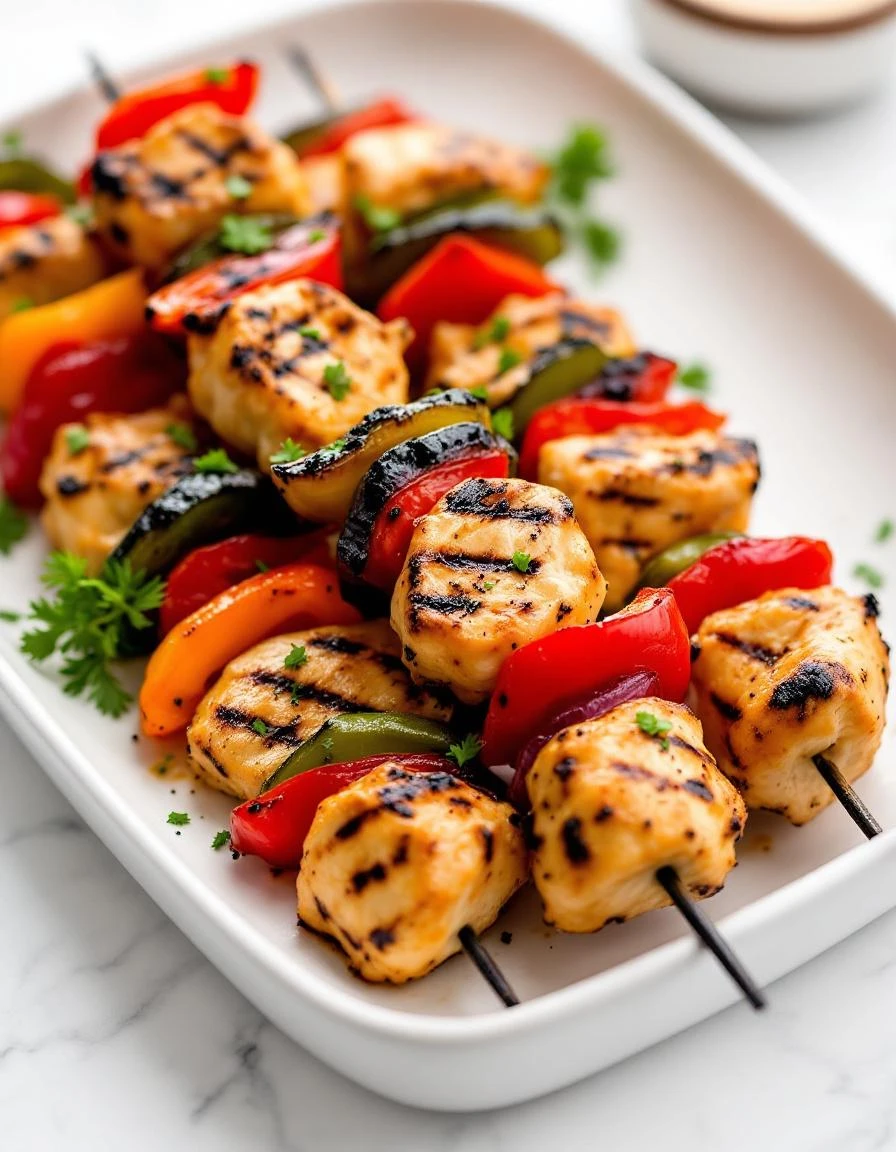
Grilled Chicken Kabobs with Bell Peppers and Red Onion
Ingredients
Equipment
Method
- Start by preparing your marinade: in a mixing bowl, whisk together lemon juice, minced garlic, chopped oregano, and chopped parsley. Slowly drizzle in olive oil while whisking until well combined.
- Add the chicken chunks to the marinade, ensuring each piece is thoroughly coated. Cover and refrigerate for 2 to 4 hours to deepen the flavor.
- While the chicken marinates, prepare your vegetables: cut the bell peppers into chunks and the red onion into thick wedges. Thread the chicken, peppers, and onions alternately onto skewers, leaving some space between pieces for even cooking.
- Preheat your grill to medium-high heat. Brush the grill grates with a little oil to prevent sticking.
- Place the skewers on the grill and cook for about 12-15 minutes, turning every 3-4 minutes to achieve an even char and caramelization. You’ll hear a sizzling sound and see juices bubbling as they cook.
- Brush the skewers with additional olive oil during grilling for extra moisture and shine. Keep an eye out for a golden-brown caramelized exterior.
- Once cooked through (internal chicken temperature should reach 165°F), remove the skewers from the grill and let rest for a couple of minutes. The aroma of herbs and grilled meat will fill the air.
- Serve the kabobs hot off the grill, garnished with a sprinkle of fresh parsley if desired. Enjoy the smoky, juicy bites with your favorite sides.
Common Mistakes and How to Fix Them
- FORGOT to marinate long enough? Extend marinating time to deepen flavor and keep chicken moist.
- DUMPED the skewers in the hot grill? Use indirect heat or pre-soak skewers to avoid burning.
- OVER-TORCHED the chicken? Lower the heat or turn the skewers more often to prevent charring.
- MISSED flipping the kabobs? Turn them regularly for even cooking and a good char all around.
Make-Ahead and Storage Tips
- Marinate the chicken and veggies a few hours ahead—up to 24 hours in the fridge for deeper flavor.
- Skewer everything before marinating if you want to save time, but keep in an airtight container if marinated separately.
- Frozen chicken can be used if thawed completely—best to marinate after thawing for even flavor penetration.
- Refrigerate skewers for up to 24 hours; longer can dilute the marinade’s brightness and affect texture.
- Reheat leftovers on a hot grill or in a skillet—look for a smoky aroma and a slight crispness to the edges.
- Flavors intensify slightly after refrigeration; expect a more concentrated, less zesty taste.
FAQs
1. How do I know when the chicken is done?
Use a meat thermometer to check for 165°F inside—touch the chicken for a firm, springy feel, not rubbery. It’s the safest way to avoid undercooked bites.
2. How can I handle hot skewers safely?
Skewers can get hot—wear kitchen gloves or use tongs to turn them. Feel the heat radiating through the sticks when flipping.
3. How long should I marinate the chicken?
Over-marinating can make chicken mushy. Stick to 2-4 hours, or overnight if you want intense flavor without texture loss.
4. How do I keep the chicken moist?
Grilling can dry out the chicken if overcooked. Baste with marinade or oil in the last few minutes for juicy, glossy bites.
5. How long can I keep leftovers?
Leftovers should be cooled quickly, stored in an airtight container, and eaten within 3 days. Reheat on the grill or in a hot skillet until it sizzles again.

Hey there, I’m Devon Harper. I run a small neighborhood café by day, cook most of my meals far too late at night, and write Midnight Grocery Runs somewhere in between. If you’ve ever wondered whether something simple could turn into something comforting after a long day, you’ll feel right at home here.


