
Peeling tomatoes is the first real act—squishy fruits under your fingertips, the skin slipping off with a bit of resistance. Rinsing everything under cold water cools your hands and washes off any residual dirt or bits of stem.
Chopping cucumbers and peppers adds a crunch that echoes through every spoonful, the knife scraping against their firm flesh. Blending everything into a smooth or chunky mess depends on your mood, but the process is straightforward and tactile, never tidy.
The gritty sound of peeling ripe tomatoes, the rough texture of cucumber skin under your fingertips, and the satisfying splash of cold water as you rinse everything—making gazpacho is a tactile, messy process that keeps your hands busy and your senses sharp.
What goes into this dish
- Ripe tomatoes: I love squeezing and peeling them—gotta feel that squishy flesh give way. If yours are meh, canned crushed tomatoes work in a pinch, but the fresh aroma of ripe ones can’t be beat, especially with that sweet, vinegary smell.
- Cucumbers: The crunch of peeling and chopping is a satisfying start; use seedless if you want less watery. If you only have waxed cukes, just peel thoroughly—skin can be bitter and tough. For a different vibe, try zucchini in summer.
- Bell peppers: I prefer red or yellow for vibrant color and sweetness, but green adds a grassy punch. Remove seeds and core, then chop; smoky roasted peppers add depth if you’re feeling ambitious. Skip if in a hurry, but don’t skip the flavor boost.
- Garlic: A clove or two, minced finely—fresh garlic gives the best bite. If you’re sensitive, toast it first for sweetness, or swap in garlic powder in a pinch. Just don’t skip garlic altogether; it’s the backbone of the flavor.
- Vinegar and olive oil: Lemon-bright vinegar adds zing, olive oil brings richness. If you prefer less acidity, cut back on vinegar—just taste as you go. Balsamic adds a sweet depth, but use sparingly so it doesn’t overpower.
- Bread or croutons (optional): A small piece of toasted bread blended in makes it creamier, or serve on the side for texture. If gluten-free, consider soaked almonds or cashews for creaminess. Skip if you want pure veg, but it’s a nice touch.
- Salt and pepper: Essential to bring everything together. I start with a pinch of sea salt, then adjust. Freshly cracked pepper adds a hit of spice—don’t skip, even if you’re tempted to keep it simple.
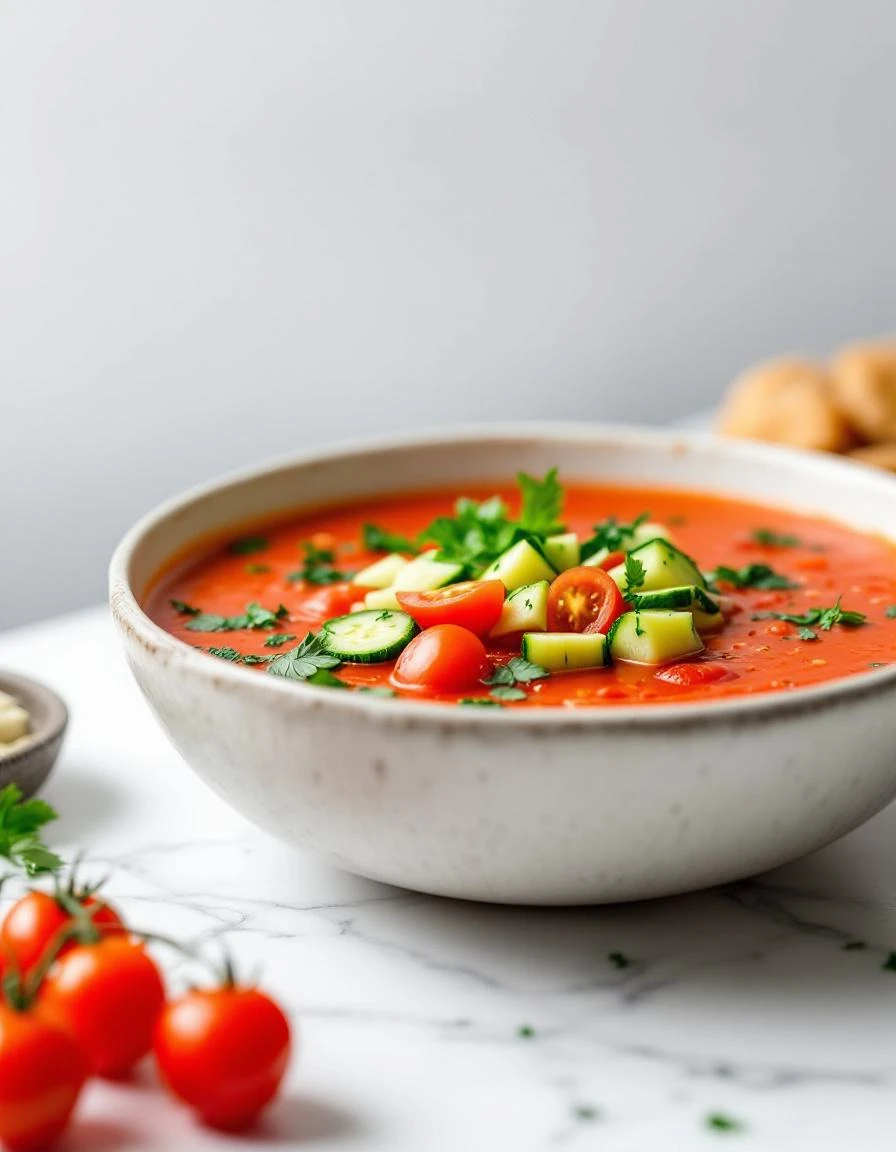
Fresh Tomato Gazpacho
Ingredients
Equipment
Method
- Peel the tomatoes by scoring a small 'X' at the bottom of each, then blanch in boiling water for 15 seconds before transferring to cold water; the skins should slip off easily.
- Gently peel the skin off each tomato with your fingers or a paring knife, revealing the soft flesh underneath.
- Rinse the peeled tomatoes, cucumbers, and bell pepper under cold water, then drain well.
- Chop the peeled tomatoes into chunks, removing core and stem bits; do the same with cucumbers and bell pepper.
- Add the chopped tomatoes, cucumbers, bell pepper, and minced garlic into a blender or bowl.
- Pour in the vinegar and olive oil, then season with a pinch of salt and some freshly cracked pepper.
- Blend everything until smooth for a silky texture, or pulse briefly for a chunkier consistency, as preferred.
- Taste and adjust seasoning with more vinegar, salt, or pepper if needed—this is the moment to brighten or mellow the flavors.
- Transfer the gazpacho to a bowl, cover, and refrigerate for at least 1 hour to let flavors meld and chill thoroughly.
- Stir the chilled soup gently, then serve in bowls with a drizzle of olive oil or fresh herbs if desired.
- Enjoy this refreshing, vibrant gazpacho on a hot day or as a light appetizer with crusty bread.
Common mistakes and how to fix them
- FORGOT to taste and adjust seasoning—always, even after blending for a balanced flavor.
- DUMPED hot water on tomatoes—use cold water to keep the flesh firm and fresh-tasting.
- OVER-TORCHED the garlic—burnt garlic turns bitter; add it later or cook gently.
- MISSED peeling the peppers—skipping this leaves skins tough and bitter, peel thoroughly.
Make-Ahead and Storage Tips
- Chopped vegetables like cucumbers and peppers can be prepped the day before, stored in airtight containers in the fridge for up to 24 hours. They stay crisp and fresh, ready to blend.
- Pureed gazpacho can be made a day ahead. Keep it covered in the fridge for up to 48 hours, but expect the flavors to meld and deepen slightly overnight.
- Freezing is not ideal—texture can suffer, and thawed soup might separate. Best to keep it chilled, not frozen.
- Taste and adjust seasoning before serving. Flavors tend to mellow overnight, so you might need a splash more vinegar or a pinch of salt.
- Reheating isn’t usually necessary—serve it cold. If you want it slightly warmer, warm gently in a bowl, but keep an eye on the texture and sensory cues like the aroma of fresh garlic and ripe tomato.
FAQs
1. Should gazpacho be served hot or cold?
Gazpacho is best served cold, around 50°F to 60°F, so it feels refreshing and not slimy on the tongue, especially on hot days.
2. What kind of tomatoes work best?
Use ripe, fragrant tomatoes — they give off a sweet, vinegary smell that really lights up the soup’s flavor.
3. How do I fix bland gazpacho?
If your gazpacho tastes flat, add a splash more vinegar and a pinch of salt; balance is key to bright flavor.
4. Should I make it smooth or chunky?
For a smoother texture, blend until completely silky; for more bite, leave some chunks. Use an immersion blender or regular blender carefully.
5. Can I make gazpacho ahead of time?
Yes, you can prepare all the chopped veggies a day early and keep them in the fridge. Just blend and season before serving.

Hey there, I’m Devon Harper. I run a small neighborhood café by day, cook most of my meals far too late at night, and write Midnight Grocery Runs somewhere in between. If you’ve ever wondered whether something simple could turn into something comforting after a long day, you’ll feel right at home here.


