
When you lay the salmon on the grill, you hear that satisfying sizzle as the flesh starts to caramelize. The asparagus needs a quick toss in oil and salt, then straight onto the hot grates, where the edges char and the stalks soften with a slight snap.
Getting the timing right is key—salmon should be flaky but still moist, and the asparagus tender but still vibrant green. You’ll flip the fish once it releases easily from the grill, and turn the stalks for even charring.
Listening to the sizzle of the salmon hitting the hot grill, the way the asparagus snaps when you poke it—these sounds and textures ground you in the simple act of cooking and eating.
What goes into this dish
- Salmon fillet: I prefer skin-on, it crisps up beautifully and keeps the fish moist—skip if you’re avoiding skin or want a leaner option, but then you lose that crispy texture and rich flavor.
- Asparagus: Fresh, firm stalks with tight tips are best—they char easily and develop a smoky note; wilted or limp asparagus will turn mushy and lose flavor, so pick firm bunches.
- Olive oil: Good quality, fruity olive oil helps the seasoning stick and adds a subtle richness—skip or use a neutral oil if you prefer a milder taste or have allergies.
- Salt and pepper: I use coarse sea salt and freshly cracked black pepper for flavor and crunch—less salt if you’re watching sodium, but then you miss that satisfying crunch and flavor punch.
- Lemon: Bright, zesty lemon adds a fresh bite—skip if citrus isn’t your thing, but then you’ll miss that vibrant, tangy contrast to the smoky fish and greens.
- Garlic (optional): Minced garlic adds a warm, aromatic depth—skip if you’re sensitive to garlic or want a simpler flavor, but then you lose a layer of savory richness.
- Herbs (like dill or parsley): Fresh herbs sprinkled on after grilling lift the dish with a burst of freshness—dried herbs can work in a pinch but won’t pack the same punch or aroma.
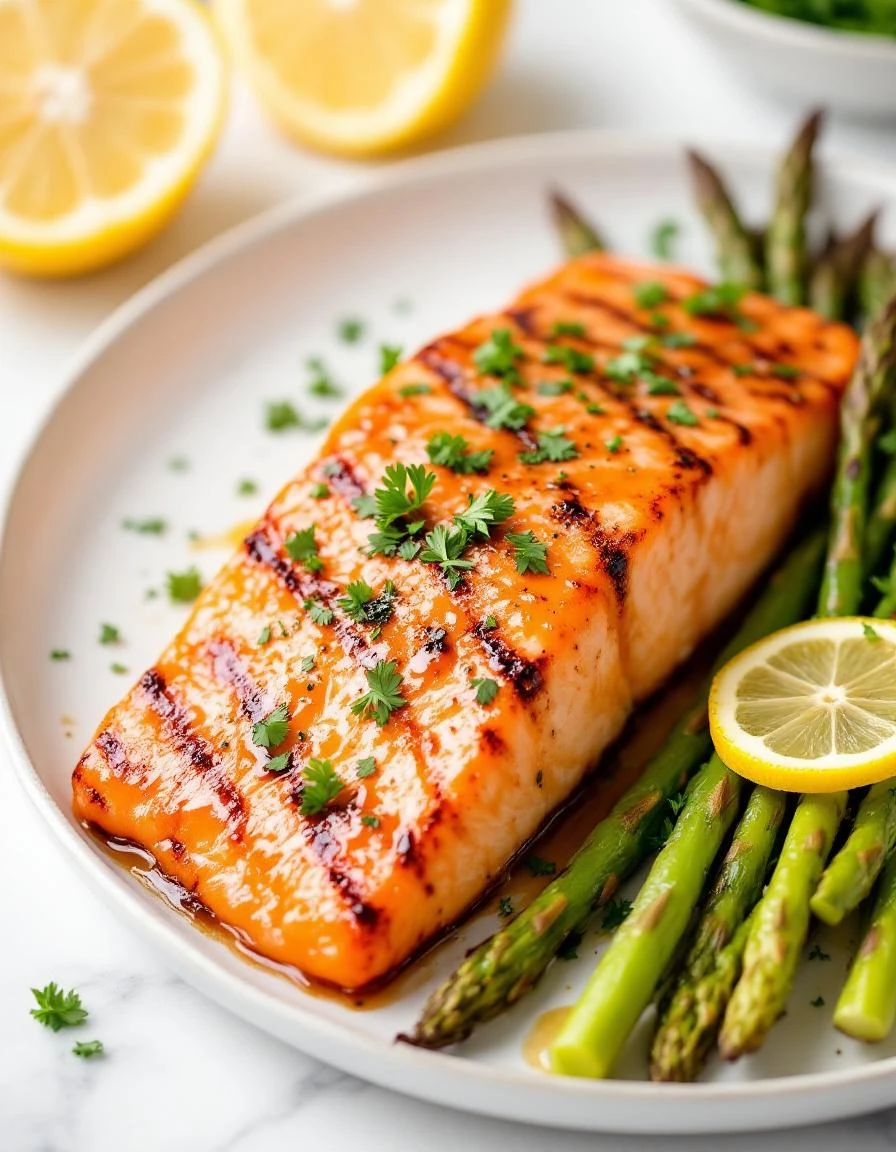
Grilled Salmon with Charred Asparagus
Ingredients
Equipment
Method
- Preheat your grill to a medium-high heat, until the surface is hot and shimmering.
- While the grill heats, toss the asparagus in olive oil, sprinkle with coarse sea salt, and freshly cracked black pepper, ensuring all stalks are evenly coated.
- Place the seasoned asparagus directly onto the hot grill grates, turning occasionally until they develop charred edges and the stalks are tender with a slight snap, about 4-5 minutes.
- Meanwhile, brush the salmon fillets lightly with olive oil and season generously with coarse salt and black pepper. Place them skin-side down on the grill.
- Grill the salmon for about 4-5 minutes on the skin side, then carefully flip using tongs, cooking for an additional 3-4 minutes until the flesh flakes easily and has a golden crust.
- During the last minute of grilling, squeeze fresh lemon juice over the salmon and sprinkle with chopped herbs for a burst of freshness and aroma.
- Remove the asparagus and salmon from the grill, and transfer to a serving platter.
- Finish the dish by garnishing with extra herbs and a final squeeze of lemon for brightness.
- Serve immediately, enjoying the crispy, smoky salmon paired with tender, charred asparagus.
Notes
Common Mistakes and How to Fix Them
- FORGOT to preheat the grill: always start with a hot grill to prevent sticking and achieve good char.
- DUMPED the asparagus in oil: toss thoroughly to coat evenly, avoiding soggy or unevenly cooked stalks.
- OVER-TORCHED the salmon: flip when it releases easily, and watch for a lightly charred, not burnt, surface.
- MISSED the timing: salmon should be flaky, asparagus tender but crisp—use a timer if needed.
Make-Ahead and Storage Tips
- Prep the salmon fillets and trim the asparagus the day before; keep everything in airtight containers to prevent odors.
- Salmon can be stored in the fridge for up to 24 hours before grilling, but for best flavor, cook within 12 hours of prepping.
- Asparagus stays fresh for 1-2 days in the fridge; blanch briefly and then ice bath if you want to pre-cook for quicker assembly.
- The flavors intensify slightly as they sit, especially with lemon and herbs—taste and adjust seasoning before grilling.
- Reheat grilled salmon gently in the oven at 275°F, watching for flaky texture, or serve cold for a quick, smoky bite.
FAQs
1. How do I tell when salmon is done?
Salmon should be firm to the touch with a slight elasticity, and the flesh should flake easily when pressed. The smell should be fresh, not fishy, with a clean, ocean-like aroma. When cooking, listen for that gentle sizzle and look for a golden crust forming.
2. How can I tell when asparagus is perfectly cooked?
Asparagus tips should be tender but still have a slight crunch when pierced. The stalks will turn a vibrant green and develop some charred edges that smell smoky. The aroma of roasted vegetables mingles with a hint of caramelized oil.
3. What kind of oil is best for grilling?
Use a good quality olive oil that has a fruity aroma—when heated, it should release a fragrant, slightly nutty scent. If you prefer a milder taste, a neutral oil like canola works, but you’ll miss that richness and depth. The oil should shimmer and have a slight aroma when heated.
4. How much seasoning do I need?
Salt and pepper should be added until you hear a slight crunch when you bite into the seasoned surface. The salt should be coarse enough to sparkle and dissolve slowly, enhancing the smoky flavor. Pepper adds a pungent, spicy aroma that intensifies as it heats up.
5. When should I add lemon juice?
A squeeze of lemon brightens the dish with a zingy, citrusy aroma and adds a tang that cuts through the smoky flavor. The juice should be fresh, and the zest should smell fragrant with a hint of bitterness. When added at the right moment, it releases a lively, sharp smell.

Hey there, I’m Devon Harper. I run a small neighborhood café by day, cook most of my meals far too late at night, and write Midnight Grocery Runs somewhere in between. If you’ve ever wondered whether something simple could turn into something comforting after a long day, you’ll feel right at home here.


