
This coconut loaf cake is my quiet rebellion against overly polished desserts. It’s not perfect—cracked on top, a little crumbly around the edges—but it’s honest and deeply comforting. I love how the toasted coconut adds a smoky, nutty aroma that fills the kitchen and whispers of lazy afternoons and tropical breezes.
Baking this cake feels like a small act of rebellion in my busy life. It’s simple, forgiving, and smells like childhood—sweet coconut and warm butter melting together. Every slice brings back memories of beach days and family gatherings, making it more than just a dessert; it’s a story in every bite.
There’s something about the rough, rustic look of this loaf that feels real. No pretenses, just good ingredients and honest flavors. It’s perfect for when you want a little sweetness without fuss, a slice of comfort that’s as easy to make as it is to enjoy.
This recipe taps into my childhood memories of lazy summer afternoons spent baking with my grandma, where the scent of toasted coconut filled the kitchen and made everything feel a little more special. It’s a cake that’s imperfectly beautiful, a bit rough around the edges, but bursting with flavor and nostalgia. Baking it is my way of reconnecting with those simple, sunny days, no matter how busy life gets.
Baking with Nostalgia and Coconut
- Baking this cake feels like wrapping myself in a warm tropical blanket, even on the coldest days.
- I get oddly emotional when I see that golden top crack—like it’s revealing a secret I can’t wait to taste.
- Sharing slices of this loaf always sparks stories about beaches, sunsets, and lazy afternoons that I cherish deeply.
- There’s a quiet pride in mastering the toasted coconut aroma—makes the whole kitchen feel like a small paradise.
- Sometimes, I secretly hope this cake will become a new family tradition, passed down just like my grandma’s recipes.
The story behind this recipe
- This cake was born out of a desperate need to use up a bag of shredded coconut that was staring at me from the pantry. I wanted something moist, with crispy edges, and a flavor that felt like a tropical vacation—without leaving the kitchen. It’s become my go-to for lazy weekends and unexpected guests, a humble loaf that surprises with its depth of flavor.
- The first time I tried to make a coconut loaf, I was experimenting with a rough recipe I found in an old baking book. It turned out a little uneven, but that rustic charm is what I love about it now. Sometimes, the best recipes are born from happy accidents, and this one’s no exception.
- heading: ‘Baking with Nostalgia and Coconut’
Coconut Loaf’s Cultural Roots
- This cake’s roots trace back to Caribbean coastal communities where shredded coconut was a readily available, affordable ingredient used in everyday baking.
- Historically, coconut loaf cakes were a humble treat, often baked in rustic homes and enjoyed during festivals or family gatherings, reflecting a communal spirit.
- In some cultures, toasted coconut on baked goods is believed to bring good luck and prosperity, making this cake more than just dessert—it’s a small celebration.
Ingredient breakdown: key components
- Shredded coconut: I love the chewy, slightly smoky texture it adds; use toasted for extra depth, or raw if you prefer milder flavor.
- Butter: Creamy and rich, it’s the backbone of this cake. Swap with coconut oil for a dairy-free version, but keep an eye on the moisture.
- Sugar: I prefer a mix of brown and white for caramel and brightness. Adjust to taste—less for a lighter crumb, more for caramel notes.
- Eggs: They bind everything together, giving structure. Using room temp eggs helps the batter come together smoothly and evenly.
- Flour: All-purpose works best, but try half whole wheat for a nuttier flavor and more rustic crumb. Sift well to avoid lumps.
- Baking powder: Just enough to lift, I’d say 1 teaspoon. Too much and it can make the top crack, so measure precisely.
- Coconut milk: The oozy, tropical element—use full-fat for richness, but light works if you’re after a less indulgent cake. Shake well before pouring.
Spotlight on key ingredients
Shredded coconut:
- I love the chewy, slightly smoky texture it adds; use toasted for extra depth, or raw if you prefer milder flavor.
- Coconut milk: The oozy, tropical element—use full-fat for richness, but light works if you’re after a less indulgent cake. Shake well before pouring.
Butter:
- Creamy and rich, it’s the backbone of this cake. Swap with coconut oil for a dairy-free version, but keep an eye on the moisture.
- Baking powder: Just enough to lift, I’d say 1 teaspoon. Too much and it can make the top crack, so measure precisely.
Notes for ingredient swaps
- Dairy-Free: Swap butter with coconut oil or vegan butter. It might be slightly less rich but keeps the tropical vibe.
- Sugar: Use coconut sugar or maple syrup for a deeper caramel flavor. Adjust the liquid content accordingly.
- Coconut Milk: Almond or cashew milk can stand in if you prefer a lighter, less oozy texture. Expect a subtler coconut aroma.
- Flour: Whole wheat or spelt flour can add nuttiness. Keep in mind they might make the crumb denser and darker.
- Toasted Coconut: Use raw shredded coconut for a milder, chewier bite. Toasting enhances smokiness and aroma.
- Eggs: Flax or chia eggs work as plant-based binders. Expect a slightly denser, more crumbly loaf.
- Additional Flavor: Add a splash of lime juice or zest for a bright, citrusy contrast to the coconut sweetness.
Equipment & Tools
- Loaf pan: Holds the batter during baking for the loaf shape.
- Skillet: To toast the coconut until fragrant and golden.
- Electric mixer or whisk: To cream butter and sugar smoothly.
- Mixing bowls: To combine ingredients separately and then together.
- Spatula: To fold ingredients and smooth the batter.
- Cooling rack: To cool the cake evenly after baking.
- Toothpick or cake tester: To check for doneness inside the cake.
Step-by-step guide to coconut loaf
- Preheat your oven to 180°C (350°F). Grease a 9×5 inch loaf pan and line it with parchment paper for easy removal.
- In a small skillet over medium heat, toast 1 cup shredded coconut until golden and fragrant, about 3-4 minutes. Set aside to cool.
- In a large mixing bowl, cream together 1/2 cup softened butter and 1 cup sugar until light and fluffy, about 2-3 minutes.
- Add 2 large eggs, one at a time, beating well after each addition. Incorporate 1 teaspoon vanilla extract.
- In a separate bowl, whisk together 1 1/2 cups all-purpose flour, 1 teaspoon baking powder, and a pinch of salt.
- Gradually add the dry ingredients to the wet, folding gently. Pour in 1/2 cup full-fat coconut milk and mix until just combined.
- Fold in the toasted coconut, reserving a tablespoon for topping if desired.
- Pour the batter into the prepared loaf pan, smoothing the top with a spatula. Sprinkle remaining toasted coconut on top.
- Bake for 45-50 minutes, or until the top is golden and a toothpick inserted in the center comes out clean. If the top browns too quickly, tent with foil.
- Once baked, remove from oven and let the cake cool in the pan for 10 minutes. Then transfer to a wire rack to cool completely.
Let the cake cool completely in the pan for at least 10 minutes, then transfer to a wire rack. Slice once cooled for clean, crumbly edges. Serve on a plate, perhaps with a dusting of extra toasted coconut or a smear of coconut yogurt.
How to Know It’s Done
- Golden brown top with a slight crackle, indicating doneness.
- Toothpick inserted in the center comes out clean or with moist crumbs, not batter.
- Cake feels firm but springy when gently pressed, not soft or jiggly.
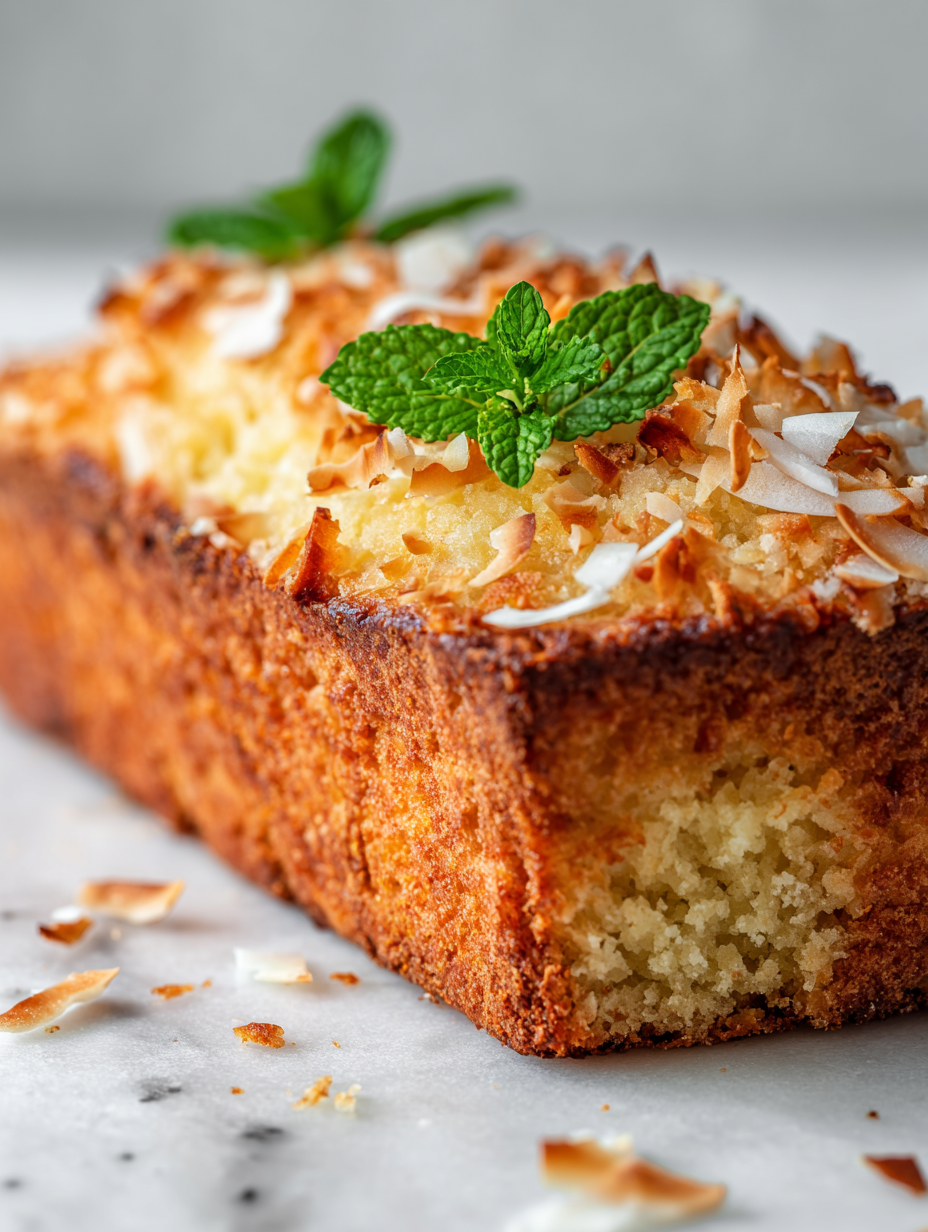
Rustic Coconut Loaf Cake
Ingredients
Equipment
Method
- Preheat your oven to 180°C (350°F). Grease your loaf pan and line it with parchment paper for easy removal.
- In a skillet over medium heat, toast the shredded coconut until it turns golden and fragrant, about 3-4 minutes. Keep an eye on it to prevent burning, then set aside to cool.
- In a large bowl, use an electric mixer or whisk to cream together the softened butter and sugar until the mixture is light, fluffy, and slightly pale, about 2-3 minutes. This helps incorporate air for a tender crumb.
- Add eggs one at a time, beating well after each addition to ensure a smooth, cohesive batter. Then stir in the vanilla extract.
- In a separate bowl, whisk together the sifted flour, baking powder, and a pinch of salt.
- Gradually fold the dry ingredients into the wet mixture, mixing gently to keep the batter airy. Pour in the coconut milk and fold until just combined.
- Fold in the toasted coconut, reserving a tablespoon for topping if you like. This adds texture and smoky flavor to the loaf.
- Pour the batter into your prepared loaf pan, smoothing the top with a spatula. Sprinkle the remaining toasted coconut on top for a crispy crust.
- Bake in the preheated oven for 45-50 minutes, until the top turns golden and a toothpick inserted in the center comes out clean. If it browns too quickly, tent with foil to prevent overbrowning.
- Remove the cake from the oven and let it cool in the pan for about 10 minutes. Then transfer it to a wire rack to cool completely, which helps prevent cracking and keeps the crumb tender.
- Once cooled, slice the loaf to reveal its rustic, cracked top and flaky crumb. Serve slices plain or with a smear of coconut yogurt or honey for extra indulgence.
Notes
Tips & Tricks for Perfect Coconut Loaf
- Bolded mini-head: Use fresh, toasted coconut for a smoky aroma that fills the kitchen.
- Bolded mini-head: Cream butter and sugar thoroughly to ensure a light, tender crumb.
- Bolded mini-head: Fold ingredients gently to keep the batter airy and avoid dense texture.
- Bolded mini-head: Check the cake around 45 minutes; look for a golden top and a clean toothpick.
- Bolded mini-head: Use room temperature eggs for smoother incorporation and even baking.
- Bolded mini-head: Slightly underbake if you prefer a moister, more fudgy interior—residual heat will finish it.
- Bolded mini-head: Sprinkle toasted coconut on top just before baking for a crispy, fragrant crust.
Common Coconut Loaf Mistakes & Fixes
- FORGOT to measure coconut: use a scale for consistency, or your cake might be too chewy.
- DUMPED the baking powder: ensure accurate measurement to prevent a dense or flat loaf.
- OVER-TORCHED coconut: toast until golden, not dark, to keep smoky flavor without bitterness.
- MISSED resting time: let the cake cool fully to avoid crumb collapse and uneven slices.
Quick Fixes and Pantry Swaps
- If burnt coconut smell rises, splash with a little water to stop further browning.
- When cake cracks excessively, patch with a dollop of frosting or coconut cream.
- Dusted with too much flour? Shake off excess before baking for a cleaner crust.
- Overbaked and dry? Shield with a drizzle of coconut syrup or serve with yogurt.
- When the loaf sticks to the pan, spray with a quick burst of non-stick spray or line more thoroughly.
Prep, store, and reheat tips
- You can toast the coconut a day ahead; keep it in an airtight container to preserve flavor and crunch.
- Bake the cake a day in advance; store it covered at room temperature for up to 24 hours, or in the fridge for up to 3 days to keep it moist.
- For longer storage, wrap the cooled cake tightly in plastic wrap and freeze up to one month; thaw at room temperature before serving.
- Reheat slices gently in the microwave for about 10-15 seconds until warm and fragrant, with coconut aroma filling the air.
Top questions about Coconut Loaf Cake
1. Can I use fresh coconut instead of shredded?
Use fresh or toasted shredded coconut for the best smoky, chewy texture. Toasted adds more depth, raw keeps it milder.
2. Can I substitute coconut milk with something else?
Full-fat coconut milk gives a rich, moist crumb with a tropical aroma. Light coconut milk works but makes the cake less oozy.
3. Is there a dairy-free version of this cake?
Yes, you can replace butter with coconut oil or vegan margarine. Expect a slightly different, but still tasty, moistness and flavor.
4. How do I know when the cake is done?
Bake until the top is golden and a toothpick comes out clean. The cake should feel firm but springy and smell toasted.
5. Can I make this cake in advance?
You can prepare the toasted coconut and mix the batter a day ahead. Wrap the cooled cake tightly and store at room temp or refrigerate.
6. What if my cake cracks or overbakes?
If the top cracks too much, press a little additional toasted coconut or icing to hide it. For uneven baking, tent with foil to prevent over-browning.
7. Any tips for mixing the batter properly?
Use room temperature eggs for a smooth batter and even rise. Gently fold ingredients to keep the crumb tender and airy.
8. How do I get a crispy coconut topping?
Sprinkle toasted coconut on top just before baking for a crispy crust. Use a gentle hand when folding in coconut to keep batter light.
9. How should I store and reheat leftovers?
Store at room temp for up to a day, or in the fridge for 2-3 days. Reheat slices briefly in microwave until fragrant and warm.
10. What quick fixes if something goes wrong?
When coconut smells burnt, quick splash of water can slow browning. If cake is dry, drizzle with coconut syrup or serve with yogurt.
This coconut loaf cake isn’t just about the flavor; it’s about capturing a moment of simplicity and warmth. The aroma of toasted coconut and melty butter filling the air makes the house feel lived-in and loved. It’s a humble, honest treat that’s perfect when you need a little comfort or a quick burst of sunshine.
Baking this cake reminds me to slow down and enjoy the small, sweet moments. Whether shared with friends or savored alone, it’s a reminder that some of the best things come from simple ingredients and a bit of patience in the oven.

Hey there, I’m Devon Harper. I run a small neighborhood café by day, cook most of my meals far too late at night, and write Midnight Grocery Runs somewhere in between. If you’ve ever wondered whether something simple could turn into something comforting after a long day, you’ll feel right at home here.


