
Peanut butter bars are one of those recipes that feel like a cozy secret, tucked away in a kitchen drawer. But what I love most is that you can really play with the texture—making them fudgy, chewy, or somewhere in between—just by swapping out the peanut butter or adjusting the baking time. It’s like a little project every time, a way to match the treat to your mood or the occasion.
I’ve made these countless times, often at the last minute when the pantry feels a little empty but I still need that rich, nutty sweetness. There’s something oddly satisfying about pressing the thick mixture into a pan, watching it set, and then slicing through that crackly top to reveal a gooey, peanut-studded center. It’s honest comfort, with just enough room for a tweak or two.
Focusing on how the texture of these peanut butter bars can be tweaked—whether you want them fudgy and dense or light and chewy—by changing the type of peanut butter or the baking time. It’s about customizing each batch to match your mood or the occasion, making each tray uniquely yours.
The story behind this recipe
- This recipe was born out of a lazy afternoon, when I realized I had a jar of peanut butter that was about to go stale and a craving for something sweet, salty, and satisfying. I wanted a treat that was simple enough to whip up without fuss but still packed with flavor and texture. The first batch was a bit fudgy, a bit chewy, and totally addictive.
- Over the years, I’ve tweaked it—adding a splash of vanilla here, a sprinkle of sea salt there—making it just right for every mood. These bars remind me of childhood snacking, but with a grown-up twist that makes them perfect for sharing or sneaking a second piece when no one’s looking.
- heading: The story behind this recipe
Ingredient breakdown
- Creamy peanut butter: I prefer the natural kind with a hint of salt—keeps the bars rich and balanced. Swap for chunky if you like some crunch in every bite.
- Butter: I use unsalted butter for control, but salted works too if you want a slightly more savory edge. Melts into the mixture smoothly, adding a glossy sheen.
- Honey: Adds a touch of shimmer and sweetness that balances the peanut richness. Try maple syrup for a different, smoky note.
- Oats: Old-fashioned rolled oats give texture and chewiness. For a softer bar, pulse them a bit in the food processor first.
- Chocolate chips: I love semi-sweet, but dark chocolate or even white chocolate can switch up the flavor. Melt a few for drizzle or sprinkle on top before setting.
- Vanilla extract: A splash deepens the flavor; skip if you want a more straightforward peanut punch. Fresh and fragrant, it elevates the whole batch.
- Sea salt: Just a pinch enhances the nutty sweetness and creates a satisfying contrast. Increase slightly if you’re feeling salty today.
Spotlight on key ingredients
Peanut Butter:
- Creamy peanut butter: I prefer the natural kind with a hint of salt—keeps the bars rich and balanced. Swap for chunky if you like some crunch in every bite.
- Butter: I use unsalted butter for control, but salted works too if you want a slightly more savory edge. Melts into the mixture smoothly, adding a glossy sheen.
- Honey: Adds a touch of shimmer and sweetness that balances the peanut richness. Try maple syrup for a different, smoky note.
Oats & Chocolate:
- Old-fashioned oats: They give these bars their chewy texture. Toast lightly before mixing for a richer flavor and nuttier aroma.
- Chocolate chips: Semi-sweet is my go-to, but dark or white chocolate can switch things up. Melts just enough to add a glossy top or stays firm for bites.
Notes for ingredient swaps
- Dairy-Free: Use coconut oil instead of butter for richness, but expect a slightly coconutty flavor and softer texture.
- Sweeteners: Maple syrup can replace honey for a more complex, smoky note—keep in mind it’s slightly thinner and may make the mixture softer.
- Oats: Gluten-free rolled oats work perfectly if you need a gluten-free version; they’ll still give that chewy bite.
- Chocolate: Dairy-free chocolate chips or chunks can be swapped in—look for brands with a coconut or rice milk base for similar melt and flavor.
- Peanut Butter: Almond or cashew butter can stand in, offering a different but equally creamy nutty profile, though the flavor shifts subtly.
- Add-ins: Swap chocolate chips for chopped nuts, dried fruit, or coconut flakes to customize texture and flavor to your mood.
- Salt: Sea salt flakes can be replaced with a pinch of flaky salt on top for a crunch and burst of saltiness.
Equipment & Tools
- 20cm (8-inch) square pan: Shapes the bars and makes slicing easier.
- Saucepan: Melts butter and honey smoothly.
- Mixing bowl: Combines dry ingredients and wet mixture.
- Spatula: Folds ingredients and presses mixture into the pan.
- Parchment paper: Prevents sticking and helps lift the bars for slicing.
Step-by-step guide to peanut butter bars
- Gather your equipment: 20cm (8-inch) square pan, saucepan, mixing bowl, spatula, and parchment paper. The pan shapes the bars, the saucepan melts ingredients, the bowl combines everything.
- Line the pan: Cut parchment to fit the bottom, crease the sides for easy removal. This keeps cleanup simple and prevents sticking.
- Melt the butter and honey: In the saucepan over low heat, warm gently for 2-3 minutes until just melted. Smell the nutty warmth, avoid boiling.
- Mix peanut butter: Off heat, stir in the peanut butter until smooth—about 30 seconds. It should be glossy and oozy, ready to blend.
- Combine dry ingredients: In a bowl, mix oats and a pinch of salt—stir until evenly distributed. This adds texture and balances sweetness.
- Incorporate dry into wet: Pour the oats into the melted mixture, fold with a spatula until fully coated and sticky, about 1-2 minutes. Should be thick but manageable.
- Press into pan: Transfer the mixture, spread evenly with a spatula or the back of a spoon. Press down firmly to compact—this influences the chewiness.
- Chill and set: Cover with plastic wrap, refrigerate for at least 2 hours, or overnight for best texture. Mixture firms up, making slicing cleaner.
- Slice and serve: Lift out with parchment, cut into squares with a sharp knife. The top should crackle slightly, revealing a dense, chewy interior.
Refrigerate until set, at least 2 hours. Slice into squares, serve directly from the fridge for best texture. For softer bars, let sit at room temperature for 10 minutes before serving.
How to Know It’s Done
- Top is crackly and golden after chilling.
- Pressing down leaves an even, firm surface without cracks.
- A clean cut reveals a dense, gooey interior without sticking to the knife.
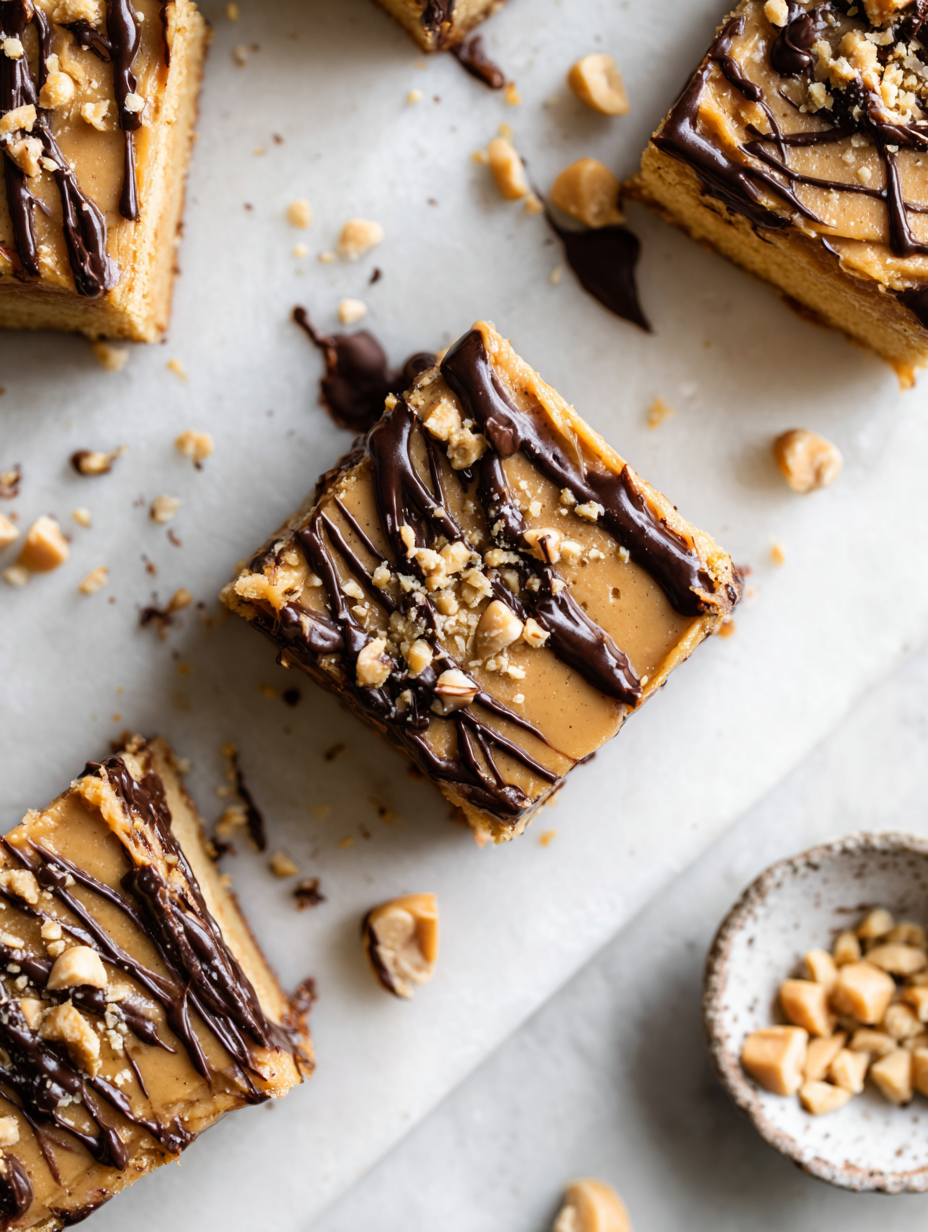
Peanut Butter Bars
Ingredients
Equipment
Method
- Line your square pan with parchment paper, creasing the sides for easy removal later.
- In a saucepan over low heat, melt the butter and honey together, stirring gently until just combined and fragrant, about 2-3 minutes.
- Off the heat, stir in the peanut butter and vanilla extract until the mixture becomes glossy and smooth—about 30 seconds.
- In a large bowl, toss the oats with a pinch of sea salt, then fold them into the peanut butter mixture until fully coated and sticky.
- Add the chocolate chips and gently fold them into the mixture for bursts of melty chocolate in every bite.
- Transfer the thick mixture into your prepared pan, pressing firmly with a spatula or the back of a spoon to create an even, compact layer.
- Sprinkle a pinch of sea salt or flaky salt on top for contrast, then cover the pan and refrigerate for at least 2 hours, or overnight, until set.
- Once chilled and firm, lift the bars out of the pan using the parchment paper and cut into squares with a sharp knife.
- Enjoy these chewy, fudgy bars straight from the fridge, or let them sit at room temperature for 10 minutes to soften slightly before serving.
Notes
Pro Tips for Perfect Bars
- Bolded mini-head: Use room temperature peanut butter to ensure smooth mixing and prevent lumps.
- Bolded mini-head: Toast the oats lightly before mixing to deepen flavor and add a nutty aroma.
- Bolded mini-head: Chill the mixture thoroughly; it firm up faster and makes slicing cleaner with a slight crackle on top.
- Bolded mini-head: Press down firmly when spreading in the pan to achieve an even, chewy texture without air pockets.
- Bolded mini-head: For extra shine, melt a few chocolate chips and drizzle over the set bars before refrigerating.
- Bolded mini-head: If the mixture seems too soft to press, refrigerate for 15 minutes to firm up and make pressing easier.
Common mistakes and how to fix them
- FORGOT to adjust oven heat → check for over-browning before removing.
- DUMPED ingredients in wrong order → add wet ingredients first, then dry for even mixing.
- OVER-TORCHED mixture → lower heat immediately and stir constantly.
- MISSED chilling time → refrigerate at least 2 hours for proper set and texture.
Quick Fixes and Pantry Swaps
- When mixture is too soft → chill for 15 minutes before pressing.
- Splash a little water on hands to prevent sticking when pressing down.
- Patch over cracks with a spoonful of warm peanut butter for seamless edges.
- Shield from over-baking by removing when edges turn golden, but center remains fudgy.
- If bars stick, use a warm knife or spatula to gently loosen edges for clean cuts.
Prep, store, and reheat tips
- Prep the mixture: You can make the peanut butter and oat mixture a day ahead; keep it covered in the fridge to prevent drying out.
- Storage: Once set, store the bars in an airtight container in the fridge for up to a week—keep them chilled for the best texture.
- Shelf life: The bars stay fresh for about 5-7 days; ooziness and chewiness stay intact, but the top may lose some crackle.
- Reheating: To soften, leave the bars at room temperature for 10 minutes or give them a quick 10-second zap in the microwave. The aroma of roasted oats and melting chocolate will perk right up.
Top questions about peanut butter bars
1. Can I use chunky peanut butter instead of smooth?
Use natural creamy peanut butter for a richer, more authentic flavor, but chunky works if you want some crunch.
2. How long do peanut butter bars last in the fridge?
Refrigerate the bars in an airtight container for up to a week; they stay chewy and fresh, with a slight crackle on top.
3. Can I make these bars vegan?
To make them vegan, swap honey with maple syrup and use dairy-free chocolate chips. The texture remains chewy but loses some richness.
4. How can I adjust the texture?
For a softer texture, chill the mixture for 15 minutes before pressing into the pan. For denser bars, bake for an extra minute.
5. How do I get clean cuts?
Use a sharp knife warmed slightly with hot water for clean slices, especially if the bars are firm after chilling.
6. Can I add salt on top?
Add a pinch of flaky sea salt on top before refrigerating to enhance the nutty flavor and add a slight crunch.
7. What are good sweetener substitutions?
You can substitute honey with agave syrup or brown rice syrup for different sweet profiles, but expect slight changes in texture.
8. What if the mixture is too soft?
If mixture is too sticky to press, refrigerate for 15 minutes or lightly oil your hands to prevent sticking.
9. Can I customize the add-ins?
Adding chopped nuts or dried fruit can give extra texture and flavor, just fold them into the mixture before pressing.
10. Why do my bars crack when I cut them?
If the bars crack or crumble when cutting, let them sit at room temperature for 10 minutes to soften slightly.
These peanut butter bars are more than just a sweet treat; they’re a small reminder of how simple ingredients can come together into something special. Whenever I make them, I think about the chaos of a busy kitchen and the quiet satisfaction of slicing through that crackly top. It’s a comfort that sticks around long after the last crumb.
In times when I need a quick pick-me-up or a little nostalgia, these bars are my go-to. They hold memories of childhood afternoons and the thrill of customizing each batch to match my mood. No matter how many times I make them, they always seem to hit just right, balancing familiarity with a touch of personal flair.

Hey there, I’m Devon Harper. I run a small neighborhood café by day, cook most of my meals far too late at night, and write Midnight Grocery Runs somewhere in between. If you’ve ever wondered whether something simple could turn into something comforting after a long day, you’ll feel right at home here.


