
When I first decided to cook ratatouille, I saw it as more than just a vegetable stew. I wanted to uncover its hidden depths—how the soft, caramelized zucchinis contrast with the tender bell peppers seasoned with fresh thyme. The aroma of garlic sizzling in olive oil fills the kitchen, evoking memories of summer markets and sun-warmed produce.
This dish isn’t just about the flavors; it’s about the ritual—layering vegetables, listening to the gentle simmer, and watching the colors intensify. The slow release of savory scents makes the whole house smell like a Mediterranean garden in full bloom. To me, it’s an ode to simplicity, transformed by time and patience into something deeply satisfying.
WHY I LOVE THIS RECIPE?
- I love how the aroma of roasting vegetables triggers instant nostalgia—all those sunny afternoons in the countryside.
- The chaos of chopping changes into calm as the ingredients come together in harmony.
- There’s pride in coaxing complex flavors from humble, everyday produce.
- Simple, honest cooking that feels like a quiet celebration of summer’s bounty.
- It reminds me that patience turns ordinary into extraordinary.
Making ratatouille is about more than the dish itself; it’s a reminder to slow down and savor each moment. The vibrant colors, the layered aromas, the textures—all come together to create a meal that feels timeless. Whether served as a main or a side, it’s a comforting yet sophisticated flavor journey that feels particularly relevant in today’s fast-paced world.
In a time when fresh produce is abundant and the flavors of summer are at their peak, this ratatouille feels like a celebration. It’s a dish that connects generations, bridging the simple and the profound—something fresh and familiar all at once.
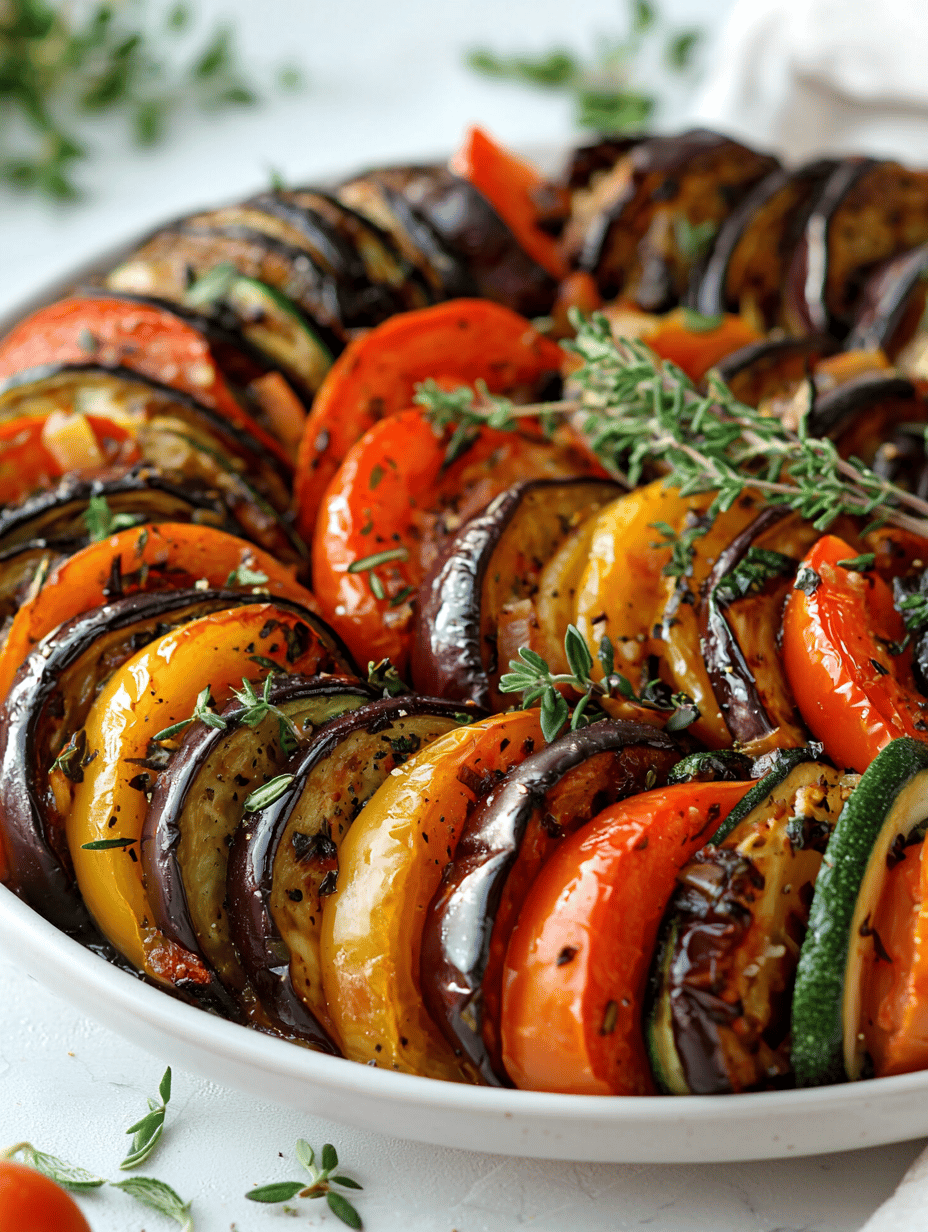
Classic Ratatouille
Ingredients
Equipment
Method
- Heat the olive oil in a large sauté pan over medium heat, and add the sliced zucchini. Sauté until they start to soften and turn golden around the edges, about 5 minutes. This develops a slight caramelization and enhances their flavor.
- Add the sliced red bell pepper and continue to cook, stirring occasionally, until the peppers soften and become fragrant, about 4 minutes. The colorful peppers will brighten the dish and flavor it with their sweet aroma.
- Stir in the cubed eggplant and cook until it starts to break down slightly and takes on a tender, translucent appearance, about 7 minutes. This step helps meld the textures and flavors together.
- Push the vegetables to the sides of the pan and add the minced garlic to the center. Sauté for about 30 seconds until fragrant, being careful not to burn it. The aroma of garlic will fill your kitchen at this point.
- Stir in the chopped tomatoes and sprinkle over the fresh thyme. Bring the mixture to a gentle simmer, then lower the heat to maintain a slow, steady simmer. Cover partially if needed and cook for about 20-25 minutes, stirring occasionally, until the vegetables are tender and the mixture has thickened slightly.
- Season the dish with salt and pepper to taste, adjusting the flavors as needed. The vegetables should be soft yet retain some shape, nestled in a fragrant, saucy mixture with rich colors.
- Remove from heat and let the ratatouille sit for a few minutes; this allows the flavors to meld beautifully.
- Serve the ratatouille warm, spooned into bowls or over grains, enjoying its vibrant colors and layered textures—soft, caramelized vegetables with a savory, aromatic sauce.
As the spoon clinks softly on the pot, I reflect on how this dish is rooted in tradition but adaptable to modern tastes. It’s a gentle reminder that good things often come from patience and care. The end result is a rich, layered dish that rewards both the cook and the eater.
There’s a quiet beauty in watching vegetables transform through slow cooking. It asks for nothing more than a connection to the ingredients and a little time. That effortless harmony is what makes ratatouille a timeless favorite, especially now, when appreciating the simple pleasures feels more important than ever.

Hey there, I’m Devon Harper. I run a small neighborhood café by day, cook most of my meals far too late at night, and write Midnight Grocery Runs somewhere in between. If you’ve ever wondered whether something simple could turn into something comforting after a long day, you’ll feel right at home here.