
Getting that brisket ready means trimming off the excess fat, leaving just enough to keep it moist during the long smoke. You’ll be peeling back the foil and scraping the blackened bark, revealing the tender meat underneath. It’s a mess, but that’s part of the process.
The smoke billows out as you set the meat on the grill, the aroma of hickory filling the air. You’ll be checking the temperature and adjusting the smoke every hour, trying to keep that steady, slow heat. It’s a patience game, watching the fat melt and the connective tissue break down.
The crackle of the bark forming on the brisket’s surface as it smokes, each layer crisping up with a smoky sheen.
Key ingredients for smoked brisket
- Brisket: I choose a well-marbled cut with a good fat cap to keep it juicy through the long smoke. If yours is leaner, consider injecting a marinade or wrapping sooner to prevent dryness.
- Salt and pepper rub: I prefer a coarse salt with cracked black pepper, really rubbing it in to form that initial crust. Skip the fancy spice blends if you want pure beef flavor, but don’t skimp on salt.
- Hickory or oak wood: The smoky aroma is key, so I use soaked chunks to avoid flare-ups. You can swap in apple or cherry for a sweeter, fruitier smoke that’s less intense but still flavorful.
- Apple cider vinegar: I spritz the brisket with a mixture for a tangy kick and to keep the bark moist. Skip it if you’re into a more straightforward smoky beef, or swap with beer or apple juice for different notes.
- Aluminum foil: I wrap the brisket in foil after a few hours to help break down connective tissue. If you prefer a crisper bark, skip the foil and just monitor the internal temp closely.
- Optional: Brown sugar or paprika in the rub adds a hint of sweetness and color, but I often leave it out for a more savory profile. Use sparingly to avoid overpowering the smoky beef.
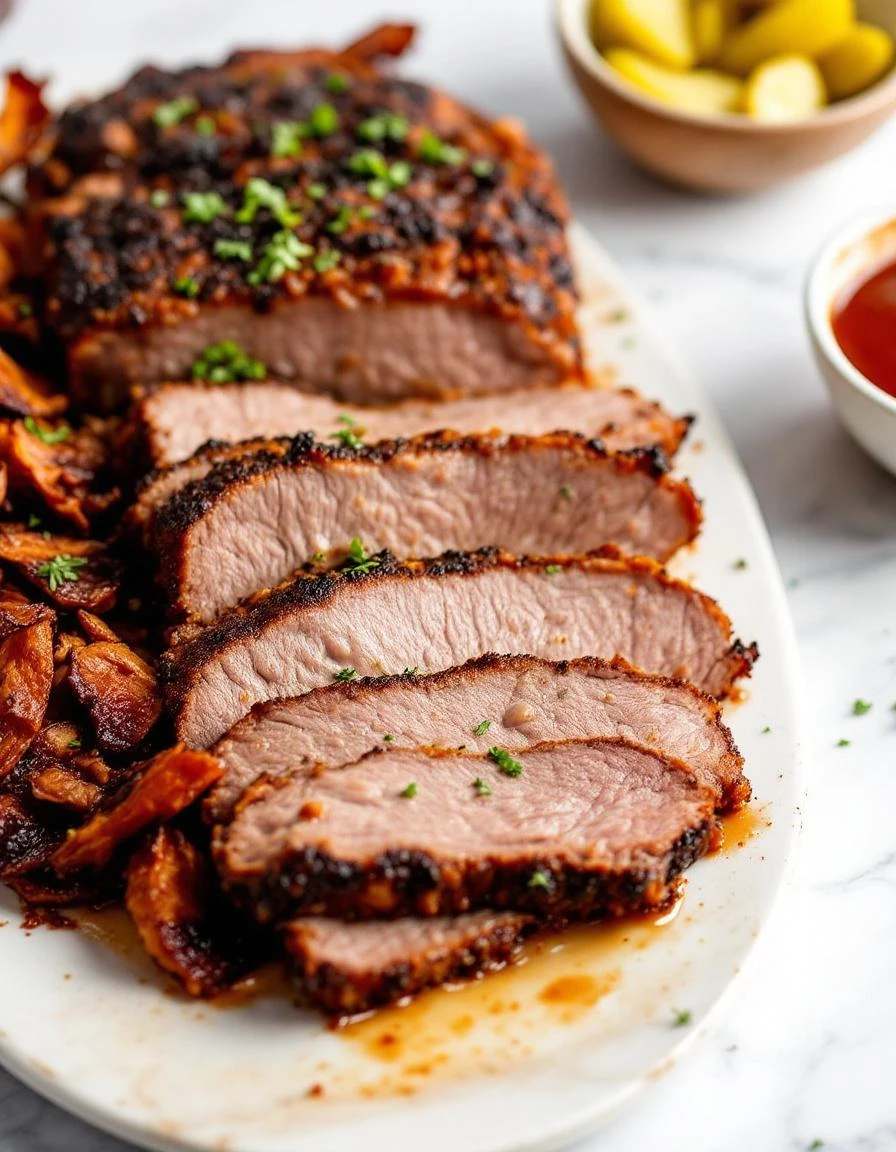
Smoked Brisket
Ingredients
Equipment
Method
- Trim excess fat from the brisket, leaving a good layer of fat on top to keep it moist during smoking.
- Mix the coarse salt and cracked black pepper together, then generously rub the mixture all over the entire surface of the brisket, pressing it into the meat to form a flavorful crust.
- Preheat your smoker or grill to a steady 225°F (107°C), adding the soaked wood chunks to generate smoky heat.
- Place the seasoned brisket on the smoker grates fat side up, and insert a meat thermometer into the thickest part of the meat.
- Slow smoke the brisket, maintaining the temperature and adding more soaked wood chunks as needed to keep a steady smoke.
- Every hour, spritz the brisket with the apple cider vinegar mixture to keep the bark moist and enhance flavor.
- After about 6 hours, start checking the internal temperature; when it reaches around 195-203°F (90-95°C), the brisket should be tender and easily pierced with a probe.
- Remove the brisket from the smoker and tightly wrap it in aluminum foil, then let it rest for at least 30 minutes to allow juices to redistribute.
- Unwrap the brisket, slice against the grain, and serve with the crispy bark and tender, smoky meat.
Common mistakes and how to fix them
- FORGOT to monitor the smoker temperature? Use a reliable probe to keep it steady.
- DUMPED the seasoning too early? Apply salt and spices just before smoking for better crust.
- OVER-TORCHED the bark? Wrap the brisket sooner or lower the heat to prevent charring.
- MISSED resting time? Let the meat rest at least 30 minutes for juices to redistribute.
Make-Ahead and Storage Tips
- You can prep the brisket the day before by trimming and seasoning it. Wrap tightly and refrigerate for up to 24 hours to let the salt penetrate.
- Once smoked, the brisket can be cooled and stored in the fridge for up to 3 days. Wrap it well in foil or plastic to keep it moist.
- For longer storage, freeze the sliced or whole brisket for up to 3 months. Thaw overnight in the fridge before reheating.
- Flavors deepen overnight, so the next day the smoky, salty notes will be more pronounced. Reheat gently to preserve tenderness.
- Reheat the brisket in a low oven (around 250°F) covered with foil. Check every 20 minutes; look for that juicy, smoky aroma and a warm, tender texture.
FAQs
1. How should brisket feel when cooked?
The smoky aroma hits your nose first, then a burst of tender, juicy meat with a slight chew and a crisp bark. Feel the meat pull apart easily as you bite into it.
2. What texture should I expect?
It should be tender but not falling apart, with a firm, yet yielding texture. The bark provides a satisfying crunch and smoky flavor with each bite.
3. How do I know it’s ready to eat?
When slicing, the meat should be moist and juicy, with visible marbling and a rich beefy smell. The surface might be slightly sticky from the seasoning crust.
4. How do I reheat without drying it out?
Reheat in a low oven until it’s warm through, smelling smoky and tasting juicy. The meat should steam gently, with a slight resistance when pierced.
5. How long can I keep smoked brisket?
Store leftovers in airtight containers in the fridge for up to 3 days, or freeze for longer. Reheat slowly, watching for moisture loss and smoky aroma revival.

Hey there, I’m Devon Harper. I run a small neighborhood café by day, cook most of my meals far too late at night, and write Midnight Grocery Runs somewhere in between. If you’ve ever wondered whether something simple could turn into something comforting after a long day, you’ll feel right at home here.


